Table of Contents
ToggleOrlando isn’t just theme parks and sunshine. It’s also becoming a hotbed for tiny home enthusiasts looking to downsize without sacrificing lifestyle. With year-round warm weather, relatively affordable land options compared to coastal Florida markets, and a growing community of minimalist-minded residents, the City Beautiful offers a unique opportunity for tiny living. But before anyone parks a 200-square-foot home on wheels or builds a micro dwelling, they need to understand local regulations, placement options, and the real costs involved. This guide walks through what it actually takes to go tiny in the Orlando area.
Key Takeaways
- Tiny homes in Orlando offer an affordable alternative to traditional homeownership, with initial investments ranging from $25,000-$120,000 depending on whether you buy pre-built, DIY build, or construct on a permanent foundation.
- Understanding local zoning regulations and permitting requirements is essential before purchasing land or a tiny home, as Orange County and surrounding municipalities have specific rules governing tiny homes on wheels (THOWs) and accessory dwelling units (ADUs).
- Orlando’s year-round warm climate reduces construction costs and complexity by eliminating the need for extensive heating systems, though hurricane-resistant construction and proper moisture barriers remain non-negotiable due to Florida’s wind and humidity conditions.
- Land placement options in the Orlando area range from private rural parcels ($20,000-$60,000) to tiny home communities with full hookups ($400-$800 monthly lot rent), each offering different levels of control and autonomy.
- Financing tiny homes requires alternative strategies like personal loans, RV financing, or cash purchases, as traditional mortgages are rarely available for structures under 400 square feet or on wheels.
- The total cost of going tiny in Orlando—including land, utilities, permits, and ongoing expenses—requires a 15-20% budget buffer for unexpected costs, but ultimately delivers lower property taxes, utility bills, and maintenance compared to conventional housing.
Why Tiny Homes Are Gaining Popularity in Orlando
Florida’s housing market has seen significant price increases over the past five years, and Orlando is no exception. The median home price in the metro area hovers around $350,000 as of early 2026, pricing out first-time buyers and young professionals. Tiny homes, typically defined as dwellings under 400 square feet, offer an alternative path to homeownership without the six-figure mortgage.
Beyond affordability, Orlando’s climate plays a major role. Unlike northern states where tiny homes require robust insulation and heating systems, Central Florida’s mild winters mean builders can focus budget on cooling efficiency and hurricane-resistant construction instead. Homeowners don’t need to worry about frozen pipes or snow load ratings on roofs, simplifying both design and maintenance.
The lifestyle appeal matters too. Orlando attracts remote workers, retirees looking to simplify, and younger residents drawn to minimalism. A tiny home fits the ethos of experiences over square footage, especially when you’re fifteen minutes from world-class theme parks, lakes, and outdoor recreation. Plus, lower utility bills and minimal maintenance free up time and money for actually living.
Understanding Orlando’s Tiny Home Zoning and Regulations
Here’s where enthusiasm meets reality: Orange County and the City of Orlando have specific zoning ordinances that govern where and how tiny homes can be placed. The county generally classifies tiny homes on wheels (THOWs) as recreational vehicles (RVs), which means they can’t be used as permanent dwellings in standard residential zones without a variance or special permit.
Tiny homes on foundations are treated differently. If built to the Florida Building Code and International Residential Code (IRC) Appendix Q standards for tiny houses, they can potentially qualify as accessory dwelling units (ADUs) in certain zoning districts. Orange County updated ADU regulations in recent years to allow them on single-family lots, provided they meet setback requirements (typically 5-10 feet from side and rear property lines) and don’t exceed 50% of the primary dwelling’s square footage.
Permit requirements are non-negotiable. Any permanent structure requires building permits, electrical and plumbing inspections, and compliance with Florida’s wind-load requirements (minimum 130 mph in most of Orange County). Tiny homes on wheels used as permanent residences often fall into a gray area, some jurisdictions allow them in RV parks or campgrounds for extended stays, but tiny home zoning laws vary significantly by municipality. Anyone serious about this route should consult the local Planning & Zoning Department before purchasing land or a home.
Seminole, Lake, and Osceola counties surrounding Orlando each have their own rules. Seminole County, for instance, has been more restrictive about THOWs, while Lake County’s rural areas offer more flexibility for off-grid or agricultural-zoned tiny living.
Where to Place Your Tiny Home in Orlando
Location options break down into a few categories, each with trade-offs.
Private Land (Owned or Leased)
Buying a small parcel, quarter-acre to one acre, gives the most control. Rural areas in eastern Orange County, southern Seminole County, or western Lake County offer land for $20,000-$60,000 depending on location and utilities. Zoning research is critical here: agricultural zoning often permits tiny homes more readily than suburban residential zones. Expect to install or connect utilities: well and septic (if no municipal water/sewer) run $8,000-$15,000 combined, and electrical service connection costs $1,500-$3,000 depending on distance from the road.
Tiny Home Communities
Several RV resorts and tiny home-friendly communities exist within a 30-mile radius of Orlando. These typically offer full hookups (water, sewer, electric), community amenities, and clear zoning approval. Monthly lot rent ranges from $400-$800. The trade-off: HOA-style rules and less autonomy than private land. Sites like Apartment Therapy often feature tours of tiny home communities for design inspiration.
Backyard ADU Placement
For those who already own property in Orlando or surrounding suburbs, placing a tiny home on a foundation as an ADU is increasingly viable. This works well for multigenerational living, guest accommodations, or rental income. Setbacks, utility taps, and parking requirements all apply. A second water meter and separate electric panel are usually required, adding $2,000-$4,000 to the project.
Temporary/Mobile Placement
Some owners park tiny homes on wheels at RV parks or campgrounds semi-permanently. This route avoids many zoning headaches but limits customization (no permanent additions or landscaping) and often caps stays at 6-12 months before requiring relocation.
Buying vs. Building a Tiny Home in Orlando
Buying a Pre-Built Tiny Home
Purchasing a turnkey unit simplifies the process but limits customization. Several builders deliver to Florida, and a handful operate locally. Expect $50,000-$90,000 for a quality THOW (200-300 square feet) from an established builder, with finishes, appliances, and basic furniture included. Higher-end models with custom cabinetry, composting toilets, solar packages, and luxury finishes push past $100,000.
Buyers should verify the home meets NOAH (National Organization of Alternative Housing) or RVIA certification if planning to place it in an RV park. Homes built to IRC Appendix Q standards are better suited for permanent foundation placement. Always inspect before purchase: check framing for proper fastening (critical for highway travel), test all systems, and confirm title/VIN documentation if it’s registered as a vehicle.
Building Your Own Tiny Home
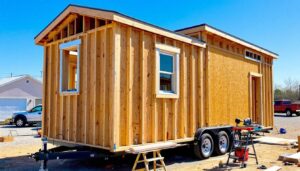
DIY builds offer the most customization and potential cost savings, if you have the skills and time. A well-planned DIY tiny home on a trailer can come in around $25,000-$45,000 in materials, assuming the owner handles most labor. A typical build takes 800-1,200 hours for someone with moderate carpentry experience.
Key cost areas for DIY:
- Trailer: A dual-axle tiny home trailer (20-24 feet) runs $4,500-$7,000. Don’t skimp here: highway-rated trailers with proper tongue weight and braking systems are essential.
- Framing lumber: Expect $3,000-$5,000 for studs, sheathing, and roofing (using actual 2x4s, which measure 1.5″ x 3.5″).
- Windows and doors: $1,500-$3,500 depending on quality and energy ratings. Impact-resistant windows rated for Florida’s wind zones add cost but may be required by code.
- Electrical and plumbing: $2,000-$4,000 in materials if DIYing: double that if hiring licensed trades (recommended and often required for permits).
Florida’s humidity demands proper moisture barriers and ventilation. Use Tyvek or similar housewrap, seal all penetrations, and plan for a mini-split HVAC system ($800-$1,500) rather than window units, they’re quieter, more efficient, and handle humidity better.
Permits are required for owner-built tiny homes on foundations. Some counties allow owner-builders to pull permits without a licensed contractor, but inspections at rough-in and final stages are mandatory. Electrical work almost always requires a licensed electrician or owner with an electrical permit.
Cost Breakdown: What to Expect When Going Tiny in Orlando
Initial Investment
- Turnkey THOW: $50,000-$100,000
- DIY build: $25,000-$50,000 (materials only)
- Foundation-built tiny home (permitted): $60,000-$120,000 including site prep and utilities
Land and Site Prep
- Raw land (quarter to one acre): $20,000-$60,000 depending on location
- Well and septic: $8,000-$15,000
- Electric hookup: $1,500-$3,000
- Gravel pad or concrete foundation: $2,000-$8,000
- Driveway and clearing: $1,500-$4,000
Ongoing Costs
- Property taxes: $300-$800/year (varies by county and assessed value)
- Insurance: $600-$1,200/year (RV insurance for THOWs, homeowners for foundation builds)
- Utilities: $80-$150/month (electric, water, internet)
- Community lot rent (if applicable): $400-$800/month
These figures are current as of April 2026 but fluctuate with material costs and labor rates. Anyone budgeting should add a 15-20% buffer for surprises, permitting delays, site issues, or upgraded finishes add up fast. For more detailed planning, a tiny home cost breakdown can help set realistic expectations.
Financing is trickier than traditional homes. Most banks won’t write mortgages for tiny homes under 400 square feet or on wheels. Personal loans, RV loans, or cash purchases are the norm. A few specialty lenders work with tiny home buyers, but expect higher interest rates (7-12%) and shorter terms (10-15 years max).
Top Tiny Home Builders and Communities in the Orlando Area
Builders Serving the Orlando Market
Several tiny home builders deliver to Central Florida, though few are based locally. Research builders carefully: ask for references, inspect previous builds if possible, and confirm delivery timelines and warranty coverage. Custom builds typically take 3-6 months from deposit to delivery.
Florida-based builders often incorporate features suited to the climate, metal roofing for hurricane resistance, elevated designs for flood zones, and enhanced insulation for HVAC efficiency. Out-of-state builders may not account for Florida-specific code requirements, so verify compliance before signing a contract. For those interested in traditional craftsmanship, Amish-built tiny homes offer quality construction with attention to detail, though delivery logistics from the Midwest add cost.
Tiny Home and RV Communities Near Orlando
A handful of communities welcome tiny homes within an hour of downtown Orlando. These range from rustic RV parks with basic hookups to upscale tiny home resorts with pools, clubhouses, and social activities. Monthly rates and rules vary widely, some allow owner-built homes, others require models from approved builders.
Residents of modern tiny home communities often praise the built-in social aspect and shared amenities, though some find lot rent adds up to near-apartment costs over time. Visit communities in person, talk to current residents, and read lease terms carefully before committing.
DIY Support and Resources
Local maker spaces, like FamiLAB in Orlando, offer tool access and workshops useful for DIY builders. Lumber yards such as 84 Lumber and local suppliers stock trailer-appropriate materials and can cut to custom dimensions. For anyone navigating the permit process, understanding tiny house permits specific to Florida jurisdictions saves headaches down the line.
Conclusion
Going tiny in Orlando is entirely doable, but it requires assignments. Zoning and permitting aren’t optional, and the upfront costs, while lower than traditional housing, still demand careful budgeting. The payoff comes in reduced living expenses, simplified maintenance, and a lifestyle that prioritizes experiences over square footage. Whether buying turnkey, building from scratch, or placing an ADU in the backyard, Orlando’s climate and growing tiny home community make it one of Florida’s better markets for downsized living. Just make sure the permits are in order before the first nail goes in.