Table of Contents
ToggleTiny homes aren’t just a trend, they’re a practical response to rising housing costs, urban sprawl, and the desire for simpler living. Indigo River Tiny Homes has carved out a reputation as a builder that balances affordability with quality craftsmanship, offering customizable floor plans that don’t feel like compromises. Whether someone’s downsizing, looking for a guest cottage, or embracing minimalist living full-time, understanding what Indigo River brings to the table, and where it falls short, matters before signing a contract.
Key Takeaways
- Indigo River Tiny Homes offers customizable floor plans with transparent material manifests, allowing buyers to modify layouts and finishes without premium markups typical of competitors.
- Base pricing ranges from $25,000–$35,000 for shell-only models to $55,000–$85,000 for fully finished turnkey builds, making them a competitive value option in the tiny home market.
- Zoning and permits are critical hurdles; most jurisdictions classify tiny homes on wheels as RVs, requiring buyers to verify local ADU codes and secure building, electrical, and plumbing inspections before placement.
- Transportation, site preparation, and specialized insurance add $5,000–$10,000+ to total costs; 24′ models weigh 8,000–10,000 pounds and require adequate towing capacity and professional movers for long distances.
- Indigo River Tiny Homes sits in the value-focused middle ground, offering better customization than luxury brands like Tiny Heirloom while maintaining functional design over premium aesthetics.
- Closed-cell spray foam insulation, upgraded electrical service, and strategic window placement significantly improve year-round livability and heating efficiency, though they increase customization costs by $3,000–$5,000.
What Makes Indigo River Tiny Homes Stand Out?
Indigo River’s approach hinges on factory-built construction combined with customer-driven customization. Unlike builders who lock buyers into a handful of fixed floor plans, Indigo River allows modifications to layout, finish materials, and appliance packages without the premium markup some competitors charge.
Their frames use 2×4 and 2×6 dimensional lumber on steel trailers rated for road transport, meeting DOT standards. Walls are insulated with spray foam or fiberglass batts (buyer’s choice), and exterior sheathing is typically LP SmartSide or corrugated metal, both durable in varied climates.
What sets them apart is transparency around the build process. Buyers get a detailed material manifest before construction starts, listing everything from joist spacing (typically 16 inches on center) to the brand of windows. This level of detail helps DIYers or owner-builders who plan to finish interiors themselves, a common cost-saving move.
They also offer shell-only options, appealing to those who want the structure and weatherproofing done professionally but prefer to handle electrical, plumbing, and finish work independently. This flexibility aligns well with the growing trend in eco-friendly building practices.
Popular Indigo River Tiny Home Models and Floor Plans
Indigo River doesn’t brand models with catchy names, they identify builds by trailer length and width: 20′, 24′, 28′, and 32′ lengths are standard, with widths of 8’6″ (road-legal without permits) or 10′ (requires wide-load escort in most states).
The 24′ × 8’6″ layout is their best-seller. It typically includes:
- A sleeping loft accessible by ladder or stairs (stairs add about 15 square feet of floor space but improve safety)
- A combined kitchen/living area with butcher block or laminate counters
- A bathroom with composting toilet or standard RV-style flush unit
- Total interior space: roughly 204 square feet, plus loft
The 28′ × 10′ model appeals to couples or remote workers needing a dedicated office nook. The extra width allows a ground-floor bedroom instead of a loft, which matters for anyone with mobility concerns or who dislikes climbing.
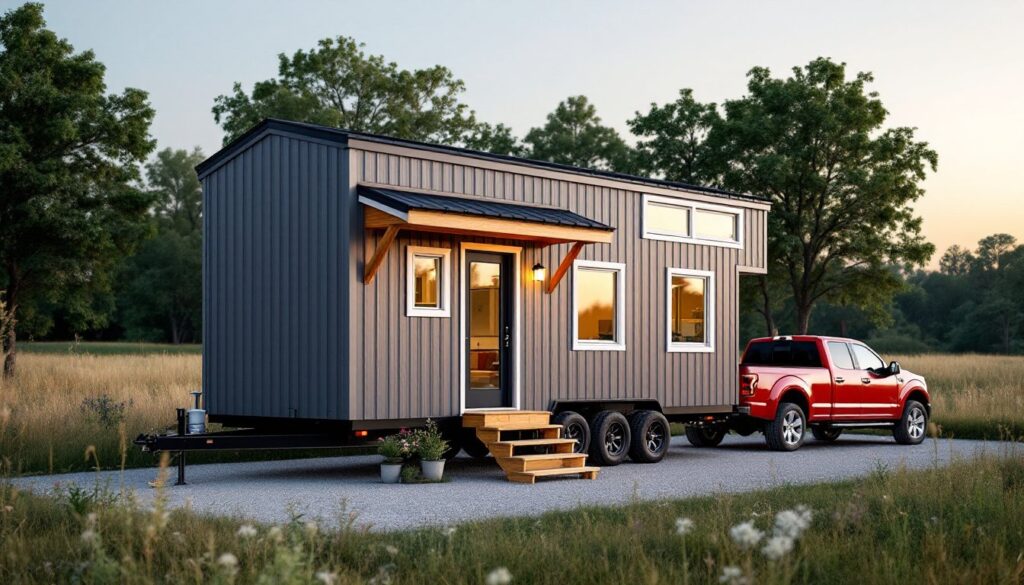
For those wanting more space, the 32-footer can fit two bedrooms (one loft, one main floor), but towing it requires a one-ton dually truck, not something the average F-150 can handle safely. Many tiny home buyers underestimate zoning restrictions tied to trailer size, so check local ADU and RV parking codes before committing to a larger build.
Pricing and Customization Options
Base pricing for an Indigo River shell starts around $25,000 to $35,000 depending on length and material upgrades. A turnkey build, fully finished, plumbed, and wired, typically runs $55,000 to $85,000. These figures are mid-2026 estimates: material costs fluctuate with lumber and metal markets.
Customization adds cost but also value. Upgrading from vinyl to aluminum-clad windows adds $1,200–$2,000 but improves thermal performance and longevity. Swapping standard fiberglass insulation for closed-cell spray foam (R-6 to R-7 per inch) adds $3,000–$5,000 but pays off in heating and cooling efficiency, critical if the home will be used year-round in climates with temperature extremes.
Electrical packages vary:
- RV-style 30-amp service (standard): suitable for small appliances, LED lighting, and a mini-split heat pump
- 50-amp or hardwired 100-amp service (upgrade): necessary for electric ranges, tankless water heaters, or multiple high-draw devices
Plumbing options include PEX or copper supply lines and either gray-water holding tanks or direct sewer hookups. Most codes require a licensed plumber for final connections, even if the builder rough-ins the system.
Understanding tiny home cost breakdowns helps buyers allocate budgets across structure, systems, and finishes without blowing past their target price.
Design Features and Interior Quality
Indigo River’s interiors lean functional rather than Instagram-ready, but that’s by design. Standard finishes include shiplap or tongue-and-groove pine walls, vinyl plank or engineered hardwood flooring, and laminate countertops. Upgrade options bring in quartz counters, tile backsplashes, and custom cabinetry, but expect to add $8,000–$12,000 for a full premium package.
Storage is engineered, not improvised. Staircase builds often incorporate drawers into each riser, a space-efficient trick that beats ladders for daily use. Kitchens feature deep base cabinets with pull-out organizers, and bathrooms use recessed shelving between studs to avoid protruding into tight floor plans.
Ceiling height is typically 13’6″ at the peak (standard tiny home trailer height), giving about 7 feet of headroom on the main floor and **3 to 4 feet in sleeping lofts. Taller individuals often opt for a single-level layout or a model with a raised roof section, check headroom in person if possible.
Windows and natural light vary by plan. Buyers can specify the number and placement of windows, but every additional opening reduces wall space for insulation and cabinetry. South-facing windows maximize passive solar gain in winter: north-facing ones minimize heat loss. Small design publications like Apartment Therapy often showcase how strategic window placement transforms tiny interiors without sacrificing thermal performance.
What to Consider Before Buying an Indigo River Tiny Home
Zoning and permits are the first hurdle. Tiny homes on wheels occupy a legal gray zone, many jurisdictions classify them as RVs, limiting where they can be parked permanently. Some areas allow them as accessory dwelling units (ADUs) if they meet IRC Appendix Q standards, which include minimum room sizes, ceiling heights, and egress windows.
Expect to need:
- A building permit if the home will be on a permanent foundation (even if it’s on a trailer)
- Electrical and plumbing inspections by licensed professionals
- Zoning variance or conditional use permit in areas where tiny homes aren’t explicitly allowed
Hiring a local contractor to handle inspections adds $1,500–$3,000 but avoids costly code violations.
Towing and transportation is non-trivial. A 24′ tiny home weighs 8,000 to 10,000 pounds: a 32′ model can hit 14,000 pounds. That requires a truck with adequate towing capacity and brake controller, plus experience handling a trailer with a high center of gravity. Many buyers hire professional movers ($3–$5 per mile), especially for long distances or routes with mountain passes.
Site prep includes:
- A level gravel or concrete pad (avoid soft soil that allows settling)
- Utility hookups: water, sewer/septic, electrical service, and potentially propane
- Tie-downs or anchors if in a high-wind zone (mobile home anchors work well)
Insurance is tricky. Standard homeowners policies don’t cover tiny homes on wheels: RV insurance may not cover stationary use. Specialized tiny home insurance exists but costs more, budget $600–$1,200 annually. Owners in states with evolving tiny home regulations should verify coverage before delivery.
How Indigo River Compares to Other Tiny Home Builders
Tumbleweed Tiny House Company offers more design polish and brand recognition but charges a premium, comparable models run 20–30% higher. Their builds often feature custom millwork and designer finishes, appealing to buyers prioritizing aesthetics over budget.
Tiny Heirloom operates at the luxury end, with pricing starting near $100,000 for turnkey builds. They integrate high-end appliances, smart home systems, and complex roof lines that require engineering stamps. It’s a different market segment entirely.
Mint Tiny House Company competes more directly with Indigo River on price and customization. Both offer shell options and transparent pricing, though Mint’s lead times currently run longer (12–16 weeks versus Indigo River’s 8–12 weeks as of early 2026).
DIY shell builders (like several regional options now available) undercut on price but require buyers to finish everything post-delivery. That’s a win for experienced DIYers, a gamble for novices.
Indigo River sits in the value-focused middle ground: better build quality than the cheapest options, more customization than the luxury brands, and realistic pricing for buyers who want a functional home, not a showpiece. Design-focused buyers might find inspiration from platforms like HGTV or Curbed, but execution matters more than aesthetics when living in 200 square feet.
Conclusion
Indigo River Tiny Homes delivers a practical, customizable product at a price point that competes well with site-built ADUs or RV living. Buyers who do their assignments on zoning, understand the trade-offs of trailer-based construction, and plan for realistic site prep costs will find a solid option here. Those skipping the research phase, especially around permits and insurance, risk expensive surprises.