Table of Contents
ToggleNew Braunfels sits at the crossroads of affordability, outdoor living, and small-town charm, perfect for anyone considering a tiny home. The Texas Hill Country city offers river access, a growing tiny home community, and relaxed regulations compared to nearby metro areas. Whether someone’s eyeing a THOW (tiny house on wheels), a custom-built shell, or a turnkey unit, New Braunfels provides options that fit a range of budgets and lifestyles. This guide covers what’s available, where to buy, local zoning rules, and the real costs involved in making the move to compact living.
Key Takeaways
- Tiny homes for sale in New Braunfels range from $25,000 for DIY shells to $90,000+ for turnkey models, with site preparation costs of $8,000–$12,000 depending on utilities and soil conditions.
- New Braunfels offers three main tiny home options: RV-style THOWs (most affordable), park model RVs (semi-permanent), and foundation-built homes that qualify for traditional mortgages.
- Zoning regulations differ significantly between the City of New Braunfels and unincorporated Comal County, so verify ADU eligibility and RV placement rules with the Planning and Development Services before buying.
- RV loans (10–15 years at 5–9% interest) are the standard financing for THOWs and park models, while foundation-built tiny homes require traditional mortgages with minimum loan amounts around $50,000.
- River access to the Guadalupe and Comal rivers, lower cost of living than Austin, and a population of 100,000 make New Braunfels an ideal location for downsize-minded buyers and remote workers seeking small-town living.
- Cash purchases and negotiated discounts of 5–10% are common in Texas’s tiny home market, but buyers should budget an additional 10–15% of the purchase price for unexpected setup expenses and first-year maintenance.
Why New Braunfels Is Perfect for Tiny Home Living
New Braunfels strikes a balance between small-town ease and practical infrastructure. The city has a population around 100,000, which means residents get access to grocery stores, hardware shops, and healthcare without the sprawl of Austin or San Antonio.
River access is a major draw. The Guadalupe and Comal rivers run through town, giving tiny homeowners year-round recreation. Many tiny home communities are within a 15-minute drive of public river parks, which beats paying HOA fees for a community pool.
Lower cost of living compared to Austin makes New Braunfels attractive for retirees, remote workers, and anyone downsizing. According to data from Angi, the average cost to install utilities and site prep for a tiny home in the region runs $8,000–$12,000, depending on soil conditions and distance from municipal hookups. That’s competitive compared to other Texas markets.
Permissive zoning in certain unincorporated areas of Comal County allows for accessory dwelling units (ADUs) and RV-style tiny homes on private land. This flexibility opens doors for people who want to place a tiny home on family property or rural acreage. Always verify current codes with the local planning department before purchasing land or a home.
Types of Tiny Homes Available in New Braunfels
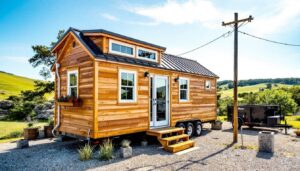
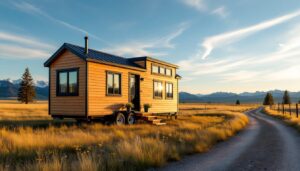
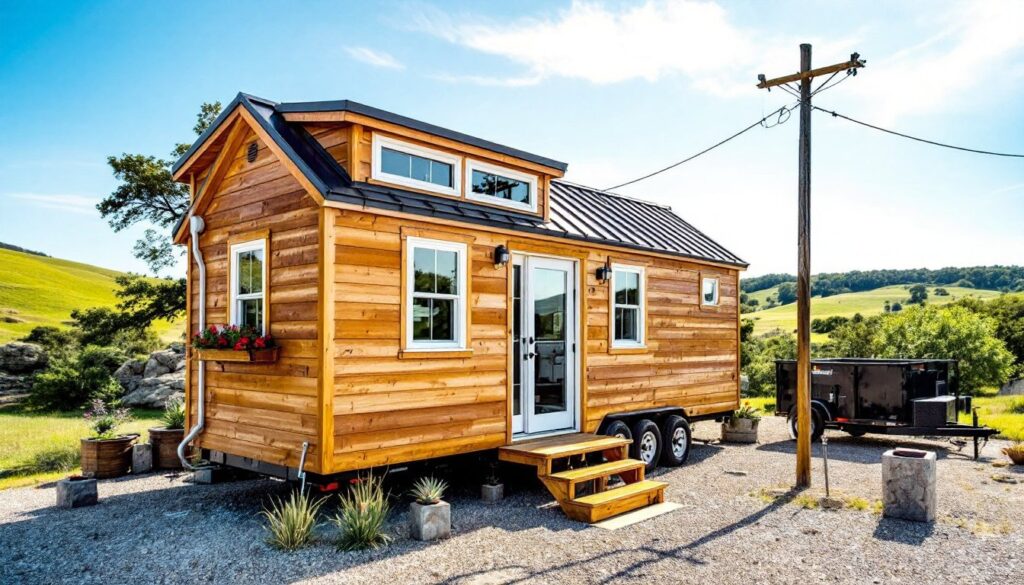
Tiny houses on wheels (THOWs) are the most common type for sale. These units are built on trailers and classified as RVs in Texas, which affects where they can be parked legally. Most THOWs range from 150 to 400 square feet and include full kitchens, bathrooms, and lofted sleeping areas. Brands like Indigo River Tiny Homes offer models built to RV Industry Association (RVIA) standards, which simplifies insurance and financing.
Park model RVs blur the line between RVs and permanent structures. These units max out at 400 square feet per ANSI A119.5 standards and are designed for semi-permanent placement in RV parks or on private land. They typically come with slide-outs, full appliances, and residential-style finishes.
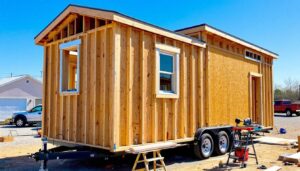
Foundation-built tiny homes are less mobile but qualify as real property in Texas. These homes sit on permanent foundations, follow International Residential Code (IRC) Appendix Q guidelines for dwellings under 400 square feet, and can be financed with traditional mortgages. Builders in the area offer custom designs starting with tiny home shells that buyers can finish themselves or hire out.
Prefab and modular tiny homes arrive in sections and get assembled on-site. These units are factory-built, which cuts down on weather delays and waste. Modular homes meet the same building codes as stick-built houses, making them easier to insure and finance.
Where to Find Tiny Homes for Sale in New Braunfels
Local builders and custom shops are the most direct route. Several Hill Country builders specialize in tiny homes and offer both turnkey models and DIY shells. Visiting a builder’s lot lets buyers inspect construction quality, check framing (most use 2×4 studs on 16-inch centers), and ask about warranty coverage.
Online marketplaces like Tiny House Listings, Facebook Marketplace, and Craigslist feature both new and used THOWs. Used models often sell for 30–50% less than new builds, but buyers should budget for potential repairs or code updates. Always request photos of the trailer frame, roof membrane, and plumbing connections before scheduling a showing.
RV dealerships in New Braunfels and nearby San Marcos carry park model RVs alongside traditional travel trailers. These dealerships can arrange financing and often include delivery and setup in the purchase price. According to ImproveNet, site delivery for a park model typically adds $2–$5 per mile, depending on unit width and route difficulty.
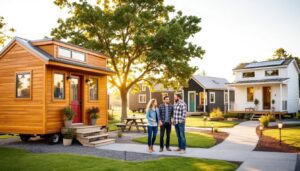
Tiny home communities sometimes list resales or offer builder partnerships. Communities like Rentokil Tiny Home Park and others in Comal County maintain waiting lists and preferred builder rosters. Buying through a community-approved builder can streamline the approval process and ensure the home meets on-site specs for hookups and setbacks.
Zoning Laws and Placement Regulations for Tiny Homes
City of New Braunfels treats tiny homes differently depending on whether they’re on wheels or on a foundation. THOWs are classified as RVs and can only be parked in approved RV parks or on private property zoned for RV use. Foundation-built tiny homes must meet minimum square footage requirements (typically 400 square feet for a primary dwelling) unless permitted as an ADU.
Accessory dwelling units (ADUs) are allowed on single-family lots in some zoning districts, provided the lot meets minimum size requirements (usually 7,500 square feet or more). ADUs can’t exceed 850 square feet and must maintain setbacks of at least 5 feet from rear and side property lines. Buyers should confirm ADU eligibility with the city’s Planning and Development Services before purchasing.
Unincorporated Comal County offers more flexibility. County regulations permit RVs and THOWs on private land for up to 180 days per year without a permit, and longer-term placement is possible with a building permit and approved septic or sewer connection. Foundation tiny homes must meet IRC standards, including egress windows (minimum 5.7 square feet of openable area) and smoke detectors in sleeping areas.
Utility hookups and permits are non-negotiable for legal placement. Electrical work must comply with the National Electrical Code (NEC), and in most cases, a licensed electrician needs to pull permits for service panel installation. Septic systems require approval from the county health department, and composting toilets are only legal where no municipal sewer is available. Safety warning: Never bypass permitting, unpermitted structures can result in fines and forced removal.
Cost Breakdown: What to Expect When Buying a Tiny Home
Base purchase price for a new THOW in New Braunfels ranges from $45,000 to $85,000, depending on size, finishes, and appliances. A 200-square-foot shell with basic framing and exterior siding starts around $25,000, while a 350-square-foot turnkey model with hardwood floors, quartz counters, and stainless appliances can exceed $90,000.
Land costs vary widely. A half-acre lot in unincorporated Comal County might sell for $30,000–$60,000, while RV park spaces rent for $400–$700 per month, including water, electric, and sewer. Buyers planning to purchase land should budget for a survey ($400–$800) and title insurance.
Site preparation includes gravel pads, utility trenching, and hookups. A level gravel pad (12’x30′ for a typical THOW) costs $800–$1,500. Running electric from the pole to the home averages $1,200–$3,000 for a 100-amp service panel. Water and sewer connections depend on distance and local utility fees: expect $2,000–$8,000 if municipal lines are nearby, or $4,000–$10,000 for a septic system on rural land. A detailed tiny home cost breakdown can help buyers understand where money goes during the build and setup phases.
Ongoing costs include property taxes (if on a foundation), RV registration (if on wheels), insurance ($600–$1,200 annually), and utilities. Propane for heating and cooking runs $30–$80 per month in winter. Internet via fixed wireless or satellite adds $50–$100 monthly in rural areas.
Financing Your Tiny Home Purchase in Texas
Traditional mortgages work only for foundation-built tiny homes on owned land. Lenders typically require a minimum loan amount (often $50,000) and may charge higher interest rates for homes under 600 square feet due to limited resale market data.
RV loans are the go-to for THOWs and park models. These loans function like auto loans, with terms of 10–15 years and interest rates between 5% and 9%, depending on credit score. Many lenders require a 10–20% down payment. Buyers should verify the home is RVIA-certified, as non-certified units are harder to finance.
Personal loans and home equity lines of credit (HELOCs) offer flexibility for buyers with equity in an existing property. HELOCs often carry lower rates than RV loans but require an appraisal and underwriting process similar to a mortgage refinance.
Builder financing is available through some tiny home companies. These programs may offer lower down payments but often carry higher interest rates (8–12%) and shorter terms. Read the fine print, some builder loans include prepayment penalties.
Cash purchases remain common in the tiny home market. Paying cash avoids interest and simplifies the buying process, but buyers should still set aside 10–15% of the purchase price for unexpected expenses during setup and first-year maintenance. According to Curbed, cash buyers in competitive markets like Texas often negotiate 5–10% discounts by closing quickly.
Conclusion
New Braunfels offers a practical entry point into tiny home living with real infrastructure, outdoor recreation, and zoning options that work for both mobile and foundation builds. Buyers who do their assignments on local codes, budget for site prep, and choose the right financing path can make the transition without surprises. Start by visiting builders, checking county zoning maps, and running the numbers on total ownership costs.