Table of Contents
ToggleHouston’s housing market is expanding in unexpected directions, and tiny homes are carving out a real niche. Whether you’re looking to downsize, save on utilities, or embrace a minimalist lifestyle, the city’s affordability, permissive zoning in certain areas, and growing tiny home community make it a surprisingly solid choice. But buying a tiny home isn’t like buying a traditional house. You’ll navigate different marketplaces, face unique financing hurdles, and need to understand local regulations before you commit. This guide walks through where to find Houston tiny homes, what they cost, and how to make your purchase legal and financially smart.
Key Takeaways
- Tiny homes for sale in Houston offer affordability and flexibility due to low land costs, relaxed building codes in unincorporated areas, and emerging tiny home communities with shared amenities.
- Search for Houston tiny homes through specialty platforms like Tiny House Listings and Tiny House Marketplace, as well as local builders, Facebook Marketplace, and land search sites for the best selection.
- Pricing for tiny homes in Houston ranges from $45,000–$70,000 for basic towable models to $80,000–$150,000 for permanent foundation builds, with high-end custom options exceeding $180,000.
- Houston’s climate requires robust cooling systems, spray foam insulation, and 12,000–18,000 BTU mini-split HVAC units to handle heat and humidity efficiently.
- Financing tiny homes is challenging since most lenders treat them as personal property; explore RV loans, personal loans, home equity lines of credit, or cash purchases as viable options.
- Verify local zoning compliance before purchasing—Houston’s unconventional zoning relies on deed restrictions and ADU allowances, and permits are essential to avoid fines or forced removal.
Why Houston Is a Great Market for Tiny Home Buyers
Houston’s combination of low land costs, relaxed (compared to other metros) building codes in unincorporated areas, and a sprawling footprint makes it one of the more accommodating cities for tiny home living. Unlike California or the Pacific Northwest, where lot prices can torpedo your tiny home budget, land in Harris, Montgomery, and surrounding counties can be had for under $50,000, sometimes significantly less if you’re willing to go rural.
The city’s lack of traditional zoning within Houston proper (replaced by deed restrictions and permitting) means you have more flexibility in some neighborhoods, though you’ll still need to confirm setbacks, ADU (accessory dwelling unit) allowances, and utility hookups. Several tiny home communities have popped up in the greater Houston area, giving buyers turnkey options with shared amenities and peer support.
Houston’s climate is another factor. Yes, it’s hot and humid, but tiny homes with spray foam insulation and mini-split HVAC systems handle the heat better than you’d think. Just budget for a robust cooling system, undersized units will run constantly and drive up your electric bill. The mild winters mean you won’t need heavy-duty heating, which keeps build costs down compared to northern markets.
Where to Find Tiny Homes for Sale in Houston
Finding houston tiny homes isn’t as straightforward as browsing Zillow. The market is fragmented across specialty builders, private sellers, and a few niche online platforms. Here’s where to start your search.
Online Marketplaces and Local Builders
Start with Tiny House Listings and Tiny House Marketplace, both of which aggregate listings from builders and private sellers nationwide. Filter by Texas and set your radius to 100 miles from Houston to capture surrounding areas.
Local builders like Indigo River Tiny offer custom and spec builds, often with delivery and setup included. Working directly with a builder gives you control over layout, finishes, and systems, but expect lead times of 4–8 months depending on their backlog. Some builders also sell floor models or canceled orders at a discount.
Don’t overlook Facebook Marketplace and Craigslist. Private sellers often list tiny homes here when relocating or upgrading. You’ll find both RVIA-certified trailers and permanent foundation models. Inspect thoroughly, ask for build receipts, permits (if applicable), and photos of the electrical panel and plumbing connections.
Land.com and LandWatch are useful if you’re buying land and a tiny home separately. Search for parcels zoned agricultural or residential with existing utilities. Bringing electric, water, and septic to raw land can add $15,000–$40,000 to your budget, so prioritize lots with infrastructure already in place.
Popular Houston Areas for Tiny Home Living
Magnolia and Tomball (northwest of Houston) are popular with tiny home buyers due to affordable land, access to Lake Conroe, and a semi-rural feel without being too remote. Montgomery County has more lenient building codes in unincorporated areas, making it easier to place a tiny home on wheels (THOW) without major permit battles.
Hockley and Waller offer larger lots (1+ acres) at lower prices, ideal if you want privacy and space for gardens or workshops. Expect 30–45 minute commutes to downtown Houston, but you’ll gain elbow room and fewer deed restrictions.
Inside the Houston city limits, placing a tiny home is trickier. Most lots require compliance with minimum square footage rules (often 600–1,000 sq ft depending on zoning district), though some neighborhoods allow tiny homes as ADUs if the primary residence meets size thresholds. Check with the Houston Permitting Center before buying a lot within city limits.
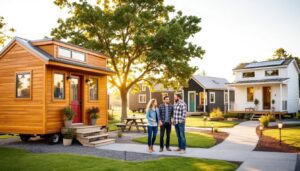
Some buyers opt for tiny home communities like those emerging near Conroe and Spring. These developments provide shared amenities (clubhouses, laundry, green space) and handle permitting and utilities collectively. Monthly lot fees typically run $300–$600, which includes water, trash, and sometimes electric.
What to Expect: Pricing and Features of Houston Tiny Homes
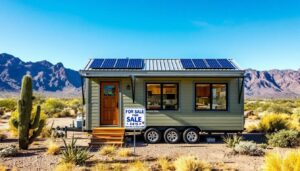
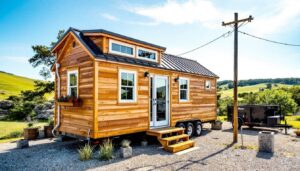
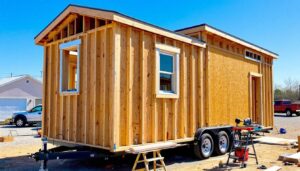
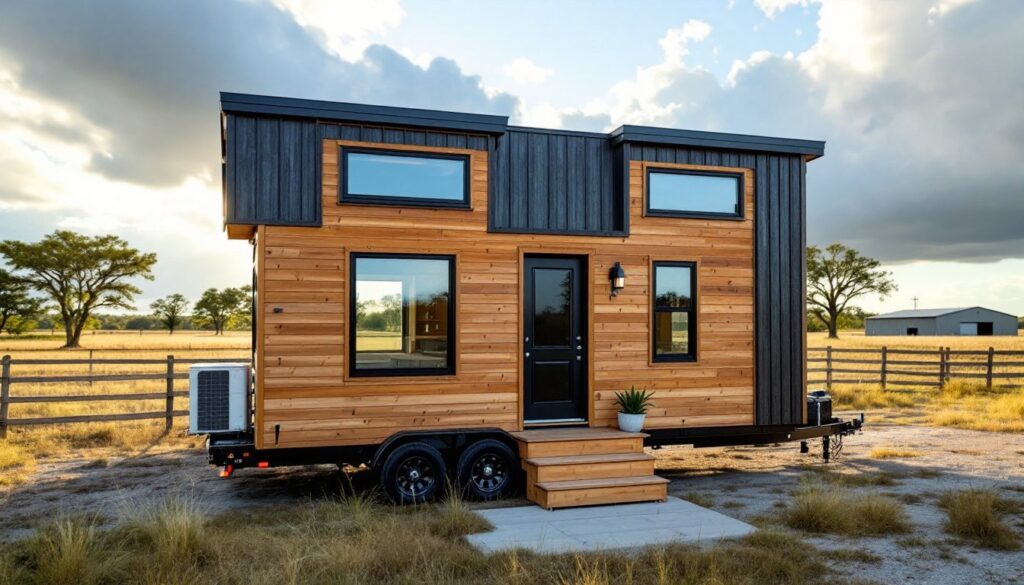
Pricing for Houston tiny homes varies widely based on size, foundation type, and finish level. A basic THOW (tiny home on wheels) in the 200–300 sq ft range starts around $45,000–$70,000 from a reputable builder. DIY shells or used models can drop below $30,000, but you’ll likely need to finish interiors and upgrade systems.
For foundation-based tiny homes (permanent, not towable), expect $80,000–$150,000 for a 400–600 sq ft build with standard finishes. High-end models with custom cabinetry, tankless water heaters, composting toilets, and solar pre-wiring can push past $180,000. Compare that to a detailed tiny home cost breakdown to see where your money goes.
Features to look for:
- Insulation: Spray foam or rigid foam board (R-13 walls, R-30+ roof) is essential in Houston’s heat. Skip fiberglass batts, they don’t handle humidity well.
- HVAC: A 12,000–18,000 BTU mini-split system is standard. Undersized units won’t keep up in July.
- Plumbing: PEX piping is common and code-compliant. Confirm the water heater is properly vented if it’s gas.
- Electrical: Look for a 100-amp service panel minimum, with GFCI outlets in kitchen and bath per NEC standards. RV-style 30-amp hookups are fine for off-grid setups but limit appliance use.
- Roof: Metal roofing (standing seam or corrugated) sheds rain better and lasts longer than asphalt shingles on a small structure.
Used tiny homes can be a bargain, but inspect the trailer frame for rust, check the roof for leaks, and test all appliances. Many Houston-area homes are designed for eco-friendly living, incorporating solar-ready wiring and low-flow fixtures.
Houston Zoning Laws and Tiny Home Regulations You Need to Know
Houston’s zoning is unconventional, the city doesn’t have traditional zoning districts, relying instead on deed restrictions, setbacks, and minimum lot sizes. This creates gray areas for tiny homes.
Inside city limits, most residential lots require a minimum habitable structure size of 600–1,000 sq ft depending on the subdivision’s deed restrictions. You can sometimes bypass this by placing a tiny home as an ADU (accessory dwelling unit) behind a compliant primary structure. ADUs must meet setback requirements (typically 5 ft from side/rear property lines) and can’t exceed 50% of the primary home’s square footage in many cases.
In unincorporated Harris County and surrounding counties (Montgomery, Waller, Liberty), codes are more flexible. Many areas allow THOWs on agricultural or residential land without minimum size restrictions, though you’ll still need septic approval if you’re not connecting to municipal sewer. Contact the county’s planning department early, requirements vary by precinct.
For THOWs, confirm whether your tiny home is RVIA-certified (built to RV standards) or IRC-compliant (built to residential building code). RVIA models are easier to finance and insure but may face restrictions in some neighborhoods. IRC-compliant homes are treated more like traditional houses, which helps with permits but complicates towing and placement.
Electrical and plumbing permits are required for any permanent installation. If you’re hooking up to city water and sewer, expect inspections at rough-in and final stages. Off-grid setups (septic, well, solar) require separate permits, budget 2–4 weeks for approvals.
Don’t skip this step. Unpermitted tiny homes can trigger fines, forced removal, or issues when you try to sell. If you’re unsure, hire a local contractor familiar with tiny home projects to walk you through the process.
Financing Your Tiny Home Purchase in Houston
Financing a tiny home is harder than financing a traditional house, but not impossible. Most conventional mortgage lenders won’t touch THOWs because they’re classified as personal property (like an RV), not real estate. If your tiny home is on a permanent foundation and meets local building codes, you may qualify for a traditional mortgage or construction loan, but the home typically needs to be at least 400 sq ft and appraised as real property.
For THOWs, consider these options:
- RV loans: If your tiny home is RVIA-certified, you can finance it through lenders like LightStream, Alliant Credit Union, or local credit unions. Rates run 6–10% depending on credit, with terms up to 15 years.
- Personal loans: Unsecured personal loans cover $30,000–$100,000 for well-qualified borrowers. Rates are higher (8–14%), but approval is faster and there’s no collateral requirement.
- Home equity loans or HELOCs: If you already own property, tapping equity can fund a tiny home purchase at lower rates (currently 7–9% for HELOCs).
- Builder financing: Some tiny home builders offer in-house payment plans. Read the fine print, interest rates can be steep, and you may not take possession until it’s paid off.
Cash purchases are common in the tiny home market, especially for used models or DIY builds. If you’re paying cash, budget an extra 10–15% for site prep, utility connections, and unexpected repairs.
Insurance is another consideration. RVIA-certified homes can be insured through RV insurance providers: permanent foundation models may qualify for standard homeowners insurance. Platforms like Angi can help connect you with local insurance agents experienced in tiny home coverage. Expect premiums of $600–$1,200/year depending on value and location.
Finally, if you’re buying land and a tiny home together, some lenders offer land and home packages. These loans bundle both purchases, but you’ll need at least 15–20% down and the land must be buildable with utilities accessible.