Table of Contents
ToggleMinimaliste isn’t just another tiny home manufacturer, it’s a Quebec-based builder that’s redefining what small-scale living can look like. These aren’t glorified sheds on wheels. They’re high-end, architect-designed structures built with the same attention to detail you’d expect from a custom home, just downsized to fit on a trailer or foundation. If you’ve been eyeing the tiny home movement but don’t want to sacrifice finishes, insulation, or aesthetics, Minimaliste deserves a serious look. This guide walks through what sets them apart, what you’ll pay, and what you need to know before committing.
Key Takeaways
- Minimaliste tiny homes combine architect-designed finishes with four-season durability through superior insulation (R-40 roof, R-20+ walls) and welded steel chassis, setting them apart from typical tiny home builders.
- Pricing ranges from $85,000 for base models to $150,000–$180,000 for larger units, with additional costs for land prep, utility hookups ($3,000–$10,000), shipping ($5,000–$15,000), and foundation work ($5,000–$15,000).
- Minimaliste offers both RVIA-certified towable models and permanent foundation-ready builds, providing flexibility to navigate zoning restrictions and financing challenges that often block tiny home purchases.
- Interior design prioritizes usable space with full-size appliances, built-in cabinetry, premium materials (white oak, quartz countertops), and generous loft clearance, avoiding gimmicky fold-out furniture.
- Before purchasing a tiny home, verify local zoning laws with your building department, as regulations vary drastically—some areas welcome ADUs while others restrict permanent RV living in residential zones.
- Minimaliste tiny homes are best suited for downsizers prioritizing quality and design over budget; renters should test the lifestyle through tiny home rentals before committing to this significant investment.
What Makes Minimaliste Tiny Homes Different?
Minimaliste homes are designed and built in Quebec, Canada, where building codes are strict and winters are brutal. That means these units are engineered for four-season living, not just fair-weather camping. They use R-40 insulation in the roof and R-20+ in the walls, well above what most North American tiny home builders offer.
Every Minimaliste model is built on a custom steel chassis rated for highway towing, with electric brakes and DOT-compliant lighting. The frames are welded, not bolted, which reduces squeaks and structural flex over time. If you’re planning to move your home more than once, that matters.
Another standout: Minimaliste offers both RVIA-certified towable models and foundation-ready builds that can be anchored permanently. That flexibility helps with zoning, insurance, and financing, which are often roadblocks for tiny home buyers. Many jurisdictions treat a permanently affixed structure differently than an RV, so having that option opens doors, literally.
Signature Design Features and Floor Plans
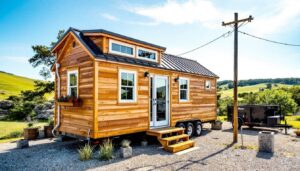
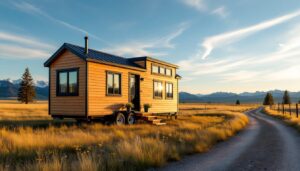
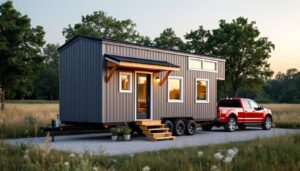
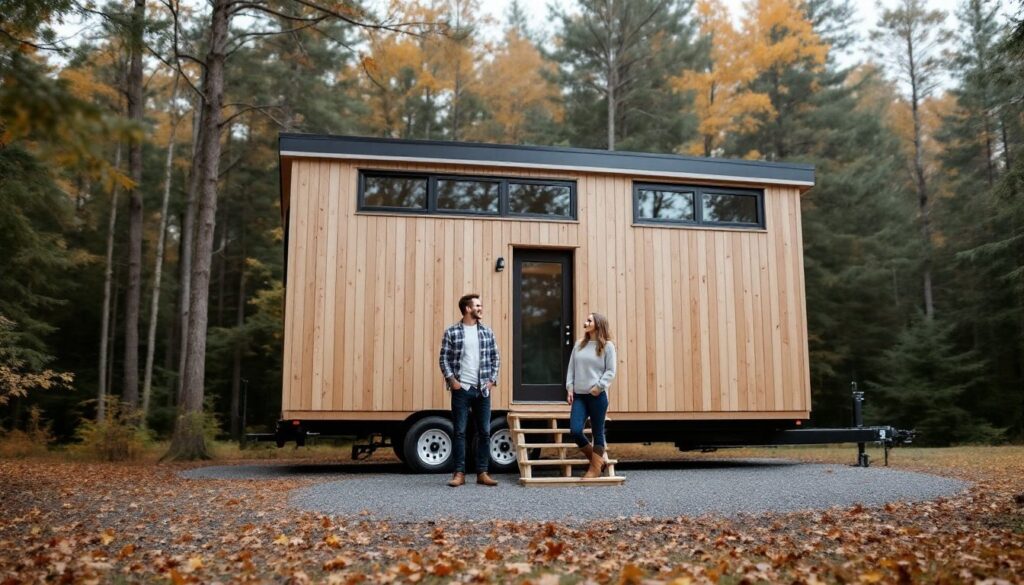
Minimaliste homes are immediately recognizable. Clean lines, standing-seam metal roofs, and floor-to-ceiling windows are standard. Most models feature a shed-style or gable roofline with generous loft clearance, some offer up to 6 feet of headroom in sleeping lofts, which is rare.
Interior layouts prioritize usable space over gimmicks. You won’t find accordion walls or fold-out furniture that breaks after six months. Instead, expect built-in cabinetry, full-size appliances, and thoughtful storage. Many models include a full bathroom with a standard 60-inch tub or tile shower, not a cramped wet bath.
Lighting is another design priority. Large windows (often Thermotech or similar triple-pane units) maximize daylight and views without sacrificing thermal performance. Some models include skylights or transom windows above loft spaces to prevent that cave-like feeling.
Floor plans range from single-loft studios (ideal for couples) to dual-loft layouts that sleep four comfortably. A few models offer main-floor bedrooms, which are worth considering if climbing a ladder every night isn’t appealing. Active downsizers embracing small space living ideas often prioritize main-floor sleeping.
Premium Materials and Craftsmanship
Minimaliste doesn’t use vinyl siding or laminate countertops. Exteriors are typically cedar, metal panels, or fiber cement, materials that hold up to weather and UV exposure. Interiors feature white oak, birch plywood, or maple cabinetry, all finished with low-VOC stains or oils.
Countertops are often quartz or butcher block, not particleboard. Flooring is usually engineered hardwood or luxury vinyl plank (LVP) rated for residential use, not the thin peel-and-stick stuff. These choices add weight and cost, but they also mean the home won’t look tired after five years.
All electrical and plumbing systems are built to code. That includes grounded outlets, GFCI protection in wet areas, and PEX plumbing with proper venting. If you’re comparing builders, ask to see their electrical panel and plumbing manifold. Minimaliste’s are clean, labeled, and accessible, signs of a pro build.
Popular Minimaliste Models: From Nomad to Ébène
The Nomad series is Minimaliste’s entry point, starting around 204 square feet. It’s a single-loft design with a galley kitchen, full bathroom, and living area. Even though the compact footprint, it doesn’t feel cramped, thanks to high ceilings and smart window placement. This model works well on a trailer and is often chosen by those transitioning into tiny living or seeking a backyard guest suite.
The Ébène is one of their most popular models, offering around 340 square feet across a dual-loft layout. The main floor includes a full kitchen with a propane or electric range, a dinette that seats four, and a bathroom with a full tub. Both lofts are accessible via built-in stairs with integrated storage, no ladders. It’s a solid choice for small families or couples who want dedicated workspace and sleeping areas. Those exploring tiny home trends often gravitate toward this layout.
The Sakura and Laurier models push toward 400+ square feet and include options for main-floor bedrooms, larger kitchens, and even washer/dryer hookups. These are essentially small cottages on wheels, designed for full-time living rather than weekend getaways.
Minimaliste also offers custom builds. If you need a home office, dedicated mudroom, or specific storage for tools or outdoor gear, they’ll work with you. Customization does add to lead time and cost, but it’s an option if the standard floor plans don’t quite fit.
Cost Breakdown: What to Budget for Your Minimaliste Home
Minimaliste homes start around $85,000 USD for a base-model Nomad and can run upward of $150,000 to $180,000 for larger, fully loaded models like the Ébène or Laurier. That’s on the high end for tiny homes, but the price reflects the build quality, materials, and included features.
Those figures typically include:
- Fully finished interior and exterior
- All appliances (fridge, range, ventilation)
- Plumbing and electrical systems
- Insulation and windows
- Lighting and fixtures
- Trailer (for towable models) or foundation prep consultation
What’s not included:
- Land or site prep: You’ll need a place to put it, whether that’s a foundation, pad, or RV parking.
- Utility hookups: Electric, water, and sewer connections are on you. Budget $3,000–$10,000 depending on your site.
- Shipping/delivery: Minimaliste ships from Quebec. Depending on your location, delivery can add $5,000–$15,000.
- Permits and inspections: Some jurisdictions require plan review, building permits, or utility permits. Budget $500–$3,000.
- Foundation or pad work: If you’re placing it permanently, expect $5,000–$15,000 for a gravel pad, concrete piers, or a slab.
Financing can be tricky. Traditional mortgages don’t always apply to tiny homes on wheels. Some buyers use RV loans, personal loans, or construction loans for foundation models. A handful of credit unions now offer tiny home–specific financing, but rates and terms vary widely. For a detailed breakdown of what to expect financially, check out this tiny home cost guide.
Resale value is hard to predict. Minimaliste’s reputation and build quality help, but the market is still niche. Don’t expect to flip a tiny home like a traditional house. Factor in depreciation similar to an RV, roughly 10–15% in the first year, then slower after that.
Zoning, Placement, and Legal Considerations
This is where most tiny home dreams hit a wall. Zoning laws vary wildly by state, county, and municipality. Some areas welcome tiny homes as accessory dwelling units (ADUs), while others classify them as RVs and restrict where they can be parked.
If your Minimaliste is on a trailer, it’s often classified as an RV, which limits where you can legally live in it full-time. Many jurisdictions prohibit permanent RV living in residential zones. Some buyers get around this by placing the home on a permanent foundation and getting it reclassified as a dwelling.
Key questions to ask your local building department:
- Can tiny homes be used as primary residences?
- Are ADUs or guest houses allowed on my property?
- What are the minimum square footage requirements for a dwelling?
- Do I need a building permit, and will my tiny home meet code?
- Are there setback, height, or lot coverage restrictions?
Some states, like California, Oregon, and Colorado, have more progressive tiny home policies. Others are decades behind. Don’t assume: verify before you buy. Navigating tiny house legal considerations is critical before committing to a builder.
Utilities are another planning item. If you’re connecting to municipal water and sewer, you’ll need permits and inspections. If you’re going off-grid with a well, septic, or composting toilet, local health departments often have strict rules. Solar setups require proper permitting and often need to meet NEC (National Electrical Code) standards.
Insurance can also be a hurdle. Standard homeowners policies don’t always cover tiny homes on wheels. You may need RV insurance, a specialty tiny home policy, or a separate structure endorsement. Shop around, not all carriers understand the product.
Is a Minimaliste Tiny Home Right for You?
Minimaliste builds high-quality homes, but they’re not for everyone. If you’re looking for a budget-friendly entry into tiny living, these aren’t it. You’re paying for premium finishes, four-season performance, and a builder with a track record. If those matter to you, the price makes sense. If you’re handy and willing to DIY, you might get similar results for less by starting with tiny home shells or working with other builders like Indigo River Tiny Homes.
Think hard about your lifestyle. Tiny living isn’t just about square footage, it’s about what you’re willing to give up. Storage is limited. Hosting dinner parties for six gets creative. If you’ve got hobbies that require gear (woodworking, cycling, kayaking), you’ll need external storage or a very organized system inspired by home organization strategies.
That said, if you value quality, design, and durability, Minimaliste delivers. Their homes hold up in harsh climates, travel well if you need mobility, and look sharp five years down the road. Many owners report lower utility bills, less maintenance, and more time spent outdoors or traveling rather than cleaning and repairing a larger home.
Before you commit, visit a model if possible. Minimaliste occasionally showcases builds at tiny home expos or allows factory tours. Spend a night in a tiny home rental to see if the lifestyle fits. It’s a big investment, and not one to make on Pinterest inspiration alone. For more design insight, resources like Dwell offer real-world examples of small-space living.
If you’ve done your assignments on zoning, have a plan for placement and utilities, and the budget aligns, a Minimaliste tiny home is one of the most thoughtfully built options on the market.