Table of Contents
ToggleAccessory Dwelling Units (ADUs) combined with tiny home design are transforming backyards nationwide. Whether it’s housing aging parents, creating rental income, or adding workspace without moving, ADU tiny homes deliver livable square footage on existing lots. They’re not RVs or temporary structures, they’re permanent additions subject to local codes and utilities. This guide walks through what ADU tiny homes actually are, the permitting maze, realistic costs, and design strategies that make small footprints work.
Key Takeaways
- ADU tiny homes are permanent, code-compliant secondary dwellings between 400–800 square feet that generate rental income ($1,500–$3,000/month) and increase property value by 20–30% in tight housing markets.
- Building an ADU tiny home costs $150–$300 per square foot nationally, with realistic budgets ranging $100,000–$200,000+ depending on region, foundation type, and mechanical systems.
- Zoning and permitting requirements vary significantly by jurisdiction—always start with your local planning department to understand setbacks, lot coverage limits, owner-occupancy rules, and parking requirements.
- Design strategies like open floor plans, loft sleeping areas, pocket doors, compact appliances, and multi-functional furniture maximize usable space and prevent cramped, cave-like interiors in ADU tiny homes.
- Three main ADU types—detached, attached, and conversion—offer flexibility, with prefab options delivering results in weeks and garage conversions reducing costs by 30–50% compared to ground-up builds.
- Separate utilities, building permits (4–12 weeks), and design review boards add planning complexity, but hiring an expediter ($1,500–$3,000) can accelerate approvals and prevent costly mid-project redesigns.
What Are ADU Tiny Homes?
An ADU tiny home is a secondary dwelling on a single-family lot, typically between 400 and 800 square feet. Unlike mobile tiny houses on trailers, ADUs are permanent structures with foundations, connected utilities, and full code compliance.
There are three main classifications:
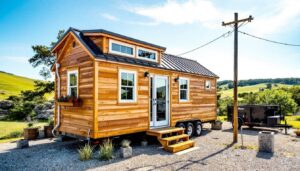
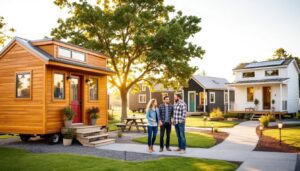
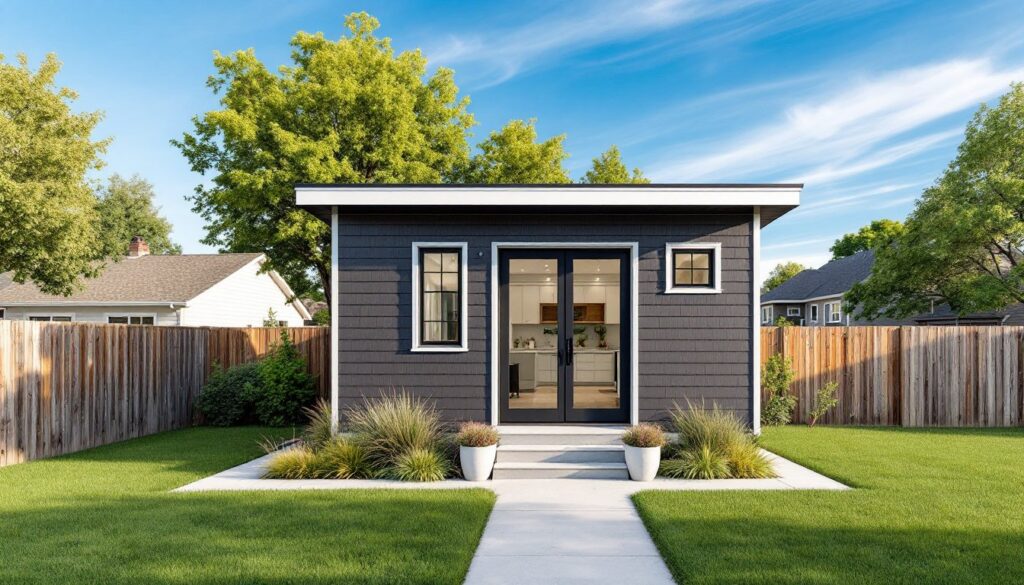
- Detached ADUs: Separate buildings in the backyard, often resembling miniature houses.
- Attached ADUs: Extensions built onto the main home, sharing at least one wall.
- Conversion ADUs: Garages, basements, or attics retrofitted into living spaces.
The “tiny home” aspect comes from the compact footprint and efficient design. Most ADUs max out local size limits, many municipalities cap them at 50% of the primary dwelling’s square footage or 1,200 square feet, whichever is less.
Key difference from RV-style tiny homes: ADUs require building permits, meet International Residential Code (IRC) standards, and increase property tax assessments. They’re taxed and assessed as permanent improvements, not vehicles.
Benefits of Building an ADU Tiny Home
Rental income tops the list. In high-demand areas, a one-bedroom ADU can generate $1,500–$3,000/month. That offsets construction loans quickly, especially if the build cost stays under $150,000.
Multigenerational living without shared walls. Aging parents get independence and proximity: adult children returning home get privacy. Separate kitchens and entries reduce friction.
Property value bump: Well-designed ADUs add 20–30% to home value in markets where housing inventory is tight. Appraisers count the square footage and income potential.
Flexible use over time: Start as a home office, convert to a guest suite, then rent it out when kids leave for college. ADUs adapt as life changes.
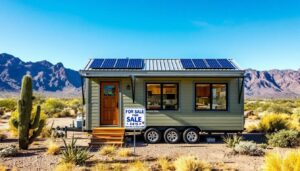
For those considering eco-friendly tiny homes, ADUs offer opportunities to integrate solar panels, rainwater collection, and energy-efficient HVAC on a smaller footprint, reducing both environmental impact and utility bills.
Avoiding a bigger mortgage: Adding 600 square feet via ADU costs less than moving to a larger house, no realtor fees, no higher property taxes on the full parcel, no relocating kids’ schools.
Types of ADU Tiny Homes for Your Property
Prefab/modular ADUs arrive in sections, set on a foundation, and connect to utilities in days. Brands like Abodu and Boxabl offer turnkey units starting around $180,000 installed. Quality varies, inspect seam details and warranty terms. Prefabs work well on flat lots with good access for delivery trucks.
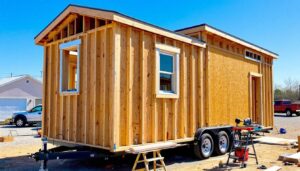
Stick-built detached ADUs are custom-framed on-site using conventional 2×4 or 2×6 wall framing. They match the main house’s exterior and allow for unique layouts. Expect 4–8 months construction time. Contractors familiar with tiny home principles, like those building Amish built tiny homes, bring craftsmanship that maximizes durability in compact designs.
Garage conversions reuse existing structure. You’ll add insulation (minimum R-13 in walls, R-30 in ceiling for most climates), drywall, electrical, and plumbing. Garage door openings often become window walls or French doors. Conversion ADUs cost 30–50% less than ground-up builds but lose parking.
Bump-out attached ADUs extend the main house’s roofline and foundation. Permitting is sometimes easier since the structure remains “one building.” Shared walls simplify HVAC and plumbing runs.
Basement or attic conversions: Rare for tiny home aesthetics, but viable if ceiling height meets code (minimum 7 feet for habitable space under IRC). Egress windows are non-negotiable, minimum 5.7 square feet of opening, 24-inch height, 20-inch width.
Planning and Zoning Requirements
Start with your local planning department, ADU rules vary block by block. Some cities fast-track permits: others ban ADUs outright or restrict them to certain zones.
Common zoning restrictions:
- Setbacks: Typically 5 feet from side/rear property lines, but some jurisdictions allow 3 feet for ADUs under 16 feet tall.
- Lot coverage: ADUs can’t push total structure footprint past 40–50% of lot area in most suburbs.
- Owner-occupancy: Some cities require the owner to live on-site (either main house or ADU).
- Parking: One additional off-street space often required, though many urban areas waive this near transit.
Understanding tiny home zoning laws helps navigate these restrictions and identify cities with ADU-friendly policies.
Design review boards in historic districts or HOA neighborhoods add another layer. Expect to submit elevations, material samples, and landscaping plans.
Utility connections: Most jurisdictions require separate electric meter and water/sewer laterals or tap fees. Septic systems need capacity analysis, an engineer tests if the existing field handles additional load.
Building permits take 4–12 weeks. Submit stamped plans from a licensed architect or engineer. Inspections occur at footing, framing, rough-in (electrical/plumbing), insulation, and final.
Navigating tiny house legal considerations early prevents expensive redesigns mid-project. Hiring an expediter ($1,500–$3,000) speeds approvals if you’re unfamiliar with local codes.
Cost Breakdown: What to Expect When Building an ADU Tiny Home
National averages run $150–$300 per square foot for detached stick-built ADUs, but regional labor and material costs swing that widely. A detailed tiny home cost breakdown covers hidden expenses like utility upgrades and landscaping restoration.
Foundation: Slab-on-grade costs $6–$10/sq ft: crawlspace or pier-and-beam adds $3,000–$8,000. Sloped lots may need retaining walls ($4,000–$15,000).
Framing and shell: Lumber, sheathing, windows, and exterior doors run $40–$60/sq ft. Prefab wall panels can shave 10% off labor.
Mechanical systems:
- Electrical: $4,000–$8,000 for panel, wiring, fixtures. Upgrading the main house panel to 200-amp service (if needed) adds $1,500–$3,000.
- Plumbing: $5,000–$12,000 depending on distance to main sewer line. Trenching through hardscape or tree roots increases cost.
- HVAC: Mini-splits (1-ton unit for ~500 sq ft) cost $2,500–$4,500 installed. Extend existing forced-air if within 25 feet and ductwork is sized for it.
Interior finishes: Drywall, flooring, cabinets, counters, and appliances total $30–$50/sq ft. IKEA or big-box cabinets keep budgets in check: custom millwork doubles costs.
Permits and fees: $3,000–$15,000 depending on jurisdiction. Impact fees (school, water/sewer capacity) can hit $20,000+ in some counties.
Realistic example: A 500-sq-ft detached ADU in a mid-cost region:
- Site work and foundation: $18,000
- Framing and exterior: $35,000
- Mechanicals: $18,000
- Finishes: $22,000
- Permits: $7,000
- Total: ~$100,000
High-cost metros (SF Bay, Seattle, LA) easily double that. According to HomeAdvisor’s cost data, tiny house builds range from $30,000 to $60,000, though permanent ADUs with full hookups typically run higher.
Financing: Home equity lines of credit (HELOCs) or cash-out refinances are common. Some lenders offer ADU-specific construction loans. Rental income projections help approval odds.
Design Ideas and Space-Saving Solutions
Open floor plans are non-negotiable. Avoid hallways, every square foot must multitask. Combine kitchen, dining, and living into one room with a 10–12 foot ceiling to prevent cave-like feel. Shed or clerestory roofs add volume without increasing footprint.
Loft sleeping areas reclaim vertical space. Code requires minimum 35 square feet of loft floor with 3 feet of headroom along half the area. Ship ladders or alternating-tread stairs save floor space but aren’t suitable for elderly occupants.
Murphy beds or sofa-sleepers keep the main level flexible. During the day, it’s a living room: at night, a bedroom.
Pocket doors and barn doors eliminate door-swing clearance. Bathroom pocket doors save 9 square feet.
Built-in storage: Stair treads with drawers, window seats with lift tops, and toe-kick drawers under cabinets capture dead space. Vertical shelving to the ceiling requires a step stool but beats clutter.
Compact appliances:
- 24-inch ranges vs. standard 30-inch
- Apartment-size refrigerators (10–12 cu ft)
- Washer-dryer combos or stacked units (2×2 feet footprint)
Multi-functional furniture: Dining tables that fold into the wall, ottomans with storage, and desks that double as kitchen islands.
Large windows and glass doors borrow visual space from the outdoors. French or sliding glass doors (6–8 feet wide) connect to patios, effectively doubling usable square footage in good weather. For design inspiration on maximizing compact layouts, platforms like Apartment Therapy showcase small-space living examples from real homes.
Light colors and reflective surfaces: White or pale gray walls, glossy tile backsplashes, and mirrors prevent the space from feeling cramped.
Outdoor storage sheds: Move bikes, tools, and seasonal items to a separate 6×8-foot shed rather than cramming closets.
Conclusion
ADU tiny homes deliver square footage and functionality without the expense of moving or major additions. They’re code-compliant, permit-required projects, not weekend builds. Budget realistically, start zoning research early, and design for adaptability. When done right, an ADU becomes the most valuable 500 square feet on the property.