Table of Contents
ToggleSearching for “tiny house village near me” isn’t just about downsizing, it’s about joining a community that values simplicity, sustainability, and intentional living. As tiny home living grows more popular, villages designed specifically for these compact dwellings are popping up across the country, offering shared amenities, lower costs, and built-in neighbors who understand the lifestyle. But not all tiny house communities are created equal, and finding the right fit takes more than a quick Google search. This guide walks through what these villages actually are, how to locate them in your area, and what to evaluate before you commit to a spot.
Key Takeaways
- A tiny house village is a planned community where compact homes (100–400 sq ft) share centralized utilities, communal amenities, and purpose-built infrastructure, operating under private ownership, co-op, or rental models.
- Lot rent in tiny house villages typically ranges from $200–$600 monthly plus lower upfront home costs ($30,000–$80,000), making it a significantly more affordable alternative to traditional apartment living.
- Finding the right tiny house village near you requires using online directories like Tiny House Community and Try It Tiny, plus local networking through Facebook groups, tiny home builders, and regional advocacy associations.
- Before committing, verify legal permits and zoning compliance with local building departments, carefully review lease or co-op terms, inspect utilities and infrastructure, and evaluate community culture and governance.
- Community connection, utility cost-sharing, environmental benefits, and built-in support networks are major advantages of tiny house villages, especially for first-time residents learning off-grid systems and efficient living.
- Get all agreements in writing and have a lawyer review contracts, as verbal promises about amenities or rate locks have no legal protection, and clarify move-out terms and resale options before signing.
What Is a Tiny House Village and How Does It Work?
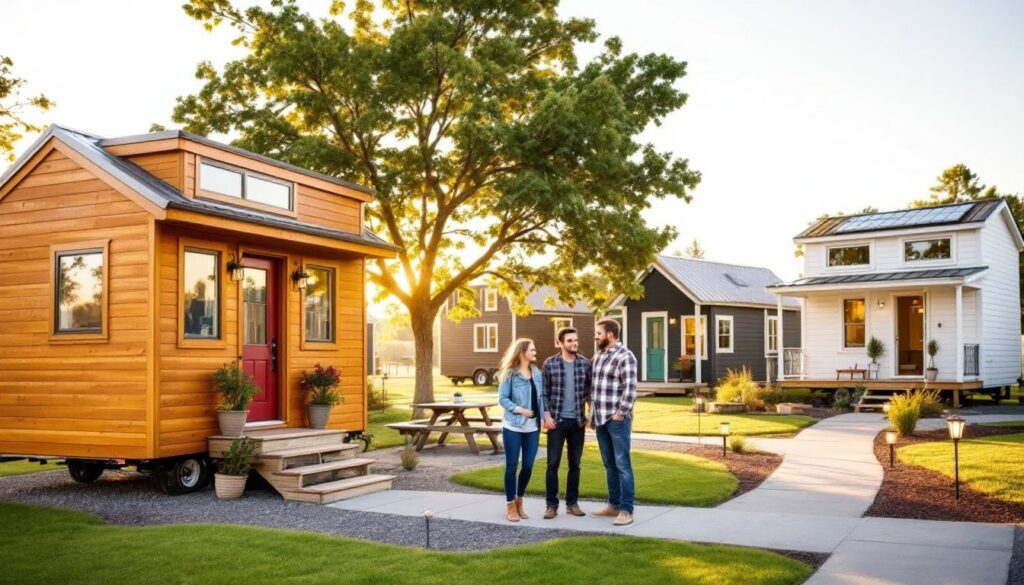
A tiny house village is a planned community where multiple tiny homes, typically ranging from 100 to 400 square feet, are clustered together on a single parcel of land. Unlike RV parks or mobile home communities, these villages are purpose-built for permanent or semi-permanent tiny dwellings, whether they’re on wheels (THOWs) or on foundations.
Most villages operate under one of three models: private ownership, co-op or co-housing, or rental communities. In private ownership setups, residents buy their tiny home and lease a lot within the village, similar to how a traditional lot lease works. Co-op models involve shared ownership of the land and communal decision-making. Rental communities let residents rent both the home and the lot, offering a lower barrier to entry.
Shared infrastructure is a defining feature. Villages often include communal utilities (water, sewer, electric hookups), shared buildings (clubhouses, laundry facilities, bathrooms), and sometimes common spaces like gardens or workshops. This setup keeps individual lot costs down and fosters community interaction.
Zoning is the big hurdle. Many municipalities don’t have clear regulations for tiny house villages, so developers often work within existing frameworks, accessory dwelling unit (ADU) codes, manufactured home park ordinances, or special-use permits. Some villages are built on agricultural land with variances, while others navigate tiny home zoning laws that vary wildly by county and state. Before considering any village, confirm it’s fully permitted and compliant with local codes.
Benefits of Living in a Tiny House Community
The primary draw is affordability. Lot rent in a tiny house village typically runs $200 to $600 per month, depending on location and amenities, far cheaper than apartment rent in most markets. Combined with the lower upfront cost of a tiny home (often $30,000 to $80,000 for a quality build), residents can drastically reduce housing expenses.
Community connection is another major benefit. Unlike isolated tiny living on private land, villages bring together people who’ve chosen the same lifestyle. Shared meals, tool libraries, skill-sharing workshops, and collaborative projects are common. It’s a built-in support network, especially valuable for first-time tiny home dwellers figuring out off-grid systems, composting toilets, or space-efficient storage.
Utility sharing cuts costs and complexity. Instead of running individual wells or septic systems, villages provide centralized hookups. Many include high-speed internet, which can be tricky to secure in rural areas where tiny homes often land. Some communities also negotiate group rates for propane, trash service, or solar installations.
Tiny house lifestyle blogs often highlight the environmental angle, and villages amplify it. Clustered development preserves open space, shared resources reduce per-capita consumption, and many communities emphasize sustainable practices like greywater systems, community composting, and native landscaping.
Safety and stability matter, too. Villages with clear land tenure, enforceable rules, and organized governance provide more security than parking a tiny home on a friend’s property or moving every few months. Residents aren’t at the mercy of a single landlord or constantly searching for the next legal parking spot.
How to Find Tiny House Villages in Your Area
Locating a village near you requires a mix of online research and local networking. Start broad, then narrow down based on your region and priorities.
Online Resources and Directories
Tiny House Community (tinyhousecommunity.com) maintains a directory of villages, land co-ops, and tiny-friendly RV parks across the U.S. and Canada. Listings include contact info, amenities, and whether spots are available. It’s not exhaustive, but it’s a solid starting point.
Try It Tiny offers a map-based search for tiny house rentals and communities. While many listings are short-term vacation rentals, some villages advertise available lots here to attract prospective residents.
Facebook groups like “Tiny House People” and regional tiny home groups (search “[Your State] Tiny Homes”) often have members posting about openings, new developments, or land-sharing opportunities. These groups also provide firsthand reviews and warnings about specific communities.
Check California cohousing communities for examples of how villages integrate with broader cohousing models, especially on the West Coast where this trend is strongest.
Don’t overlook Craigslist and Zillow Land searches. Some villages list lot leases under “housing wanted” or “land for rent,” and developers sometimes advertise new projects under real estate listings. Search terms like “tiny home lot,” “THOW parking,” or “small house community” can surface opportunities that aren’t in formal directories.
Understanding tiny home cost breakdowns helps evaluate whether a village’s lot fees align with your overall budget.
Connecting with Local Tiny Home Groups
Face-to-face networking often yields better intel than online searches. Local tiny house meetups and workshops are hosted by advocacy groups, tiny home builders, and sustainability organizations. Attendees often know about under-the-radar villages, land co-ops forming, or owners looking to add a tenant to private land.
State and regional tiny house associations, like the Tiny Home Industry Association or local chapters, maintain resources and can connect you with village developers or residents. Some associations actively lobby for zoning changes and can tell you which municipalities are tiny-friendly.
Reach out to tiny home builders in your area. Builders like Indigo River Tiny Homes often have relationships with villages and landowners, since their clients need somewhere to park finished builds. They may know of upcoming developments or existing communities with openings.
Attend city planning and zoning meetings if you’re serious about staying local. Some municipalities are drafting or revising tiny house ordinances, and these meetings reveal where future villages might emerge. You’ll also meet other advocates who may be organizing private communities.
Check with land trusts and affordable housing nonprofits. Organizations focused on housing access sometimes develop or support tiny house villages as a solution for low-income residents, veterans, or people transitioning out of homelessness. These villages may have income requirements or waitlists, but they’re worth exploring if affordability is a priority.
What to Look for When Evaluating a Tiny House Village
Once you’ve identified potential villages, dig into the details before committing. Here’s what to investigate.
Legal status and permits: Confirm the village has all necessary permits and is compliant with local zoning. Ask for documentation. If a village is operating in a legal gray area or relying on a temporary variance, you risk eviction or code enforcement action. Check with the local building department to verify permits independently.
Land tenure and lease terms: Understand how land ownership works. In a lease model, read the contract carefully, what’s the term length, can rent increase, what happens if the landowner sells, are subleases allowed? In a co-op, review the bylaws and decision-making structure. Know your rights and obligations.
Utilities and infrastructure: Walk the site and inspect hookups. Are electric pedestals rated for 30-amp or 50-amp service? Is water metered individually or shared? Is there municipal sewer, septic, or composting systems? Ask about internet speed and reliability, many rural communities promise connectivity but deliver slow DSL. If propane or off-grid solar is involved, clarify who maintains equipment and how costs are divided.
Rules and governance: Every village has rules, quiet hours, pet policies, guest restrictions, exterior modifications, parking. Request a copy of community guidelines and HOA-style covenants. Ask who enforces rules and how disputes are resolved. If governance is by committee, find out how decisions are made and whether you’ll have a vote.
Amenities and shared spaces: Evaluate what’s included in lot rent. Common amenities are bathhouses, laundry, mail service, community buildings, playgrounds, and storage sheds. Some villages include wifi, trash, and snow removal: others charge separately. Visit during different times of day to see how spaces are used and maintained.
Community culture and fit: Spend time talking to current residents. Are they friendly and engaged, or is it more of an anonymous arrangement? Some villages emphasize communal living with shared meals and work days: others are just affordable parking with minimal interaction. Know which vibe you want. If you’re considering a village that requires resident labor (cleaning, landscaping, maintenance), make sure that expectation is clear.
Proximity to services: Tiny living often means fewer on-site resources, so location matters. How far to grocery stores, healthcare, work, schools? Is public transit available, or will you need a vehicle? If you’re planning to work remotely, test cell signal and internet before signing anything.
Exit strategy: Ask about move-out terms. Can you sell your tiny home while it’s on-site, or must you haul it out? Is there a waitlist of buyers, or will you need to market it yourself? Researching moves and transitions can help you plan logistics if you need to relocate your home later.
Be cautious of brand-new villages with no residents yet. Developers sometimes oversell amenities or underestimate infrastructure costs, leading to incomplete buildouts or sudden fee increases. Established communities with a track record are lower-risk.
If you’re unfamiliar with tiny house legal considerations, now’s the time to educate yourself, villages won’t always disclose every regulatory nuance.
Finally, get everything in writing. Verbal promises about future amenities, rate locks, or grandfathered terms mean nothing without a signed agreement. Have a lawyer review any lease or purchase contract, especially if it involves co-op shares or land equity.
Conclusion
Finding the right tiny house village takes assignments, but the payoff, affordable housing, built-in community, and a simpler lifestyle, makes the effort worthwhile. Start your search with online directories and local networks, then vet each option carefully for legal compliance, solid infrastructure, and a culture that fits your needs. Tiny living isn’t just about square footage: it’s about finding a place and people that support the life you want to build.