Table of Contents
ToggleMontana’s wide-open skies and rugged terrain have always attracted people who value independence and elbow room. But in 2026, a growing number of those folks are choosing to embrace it in homes under 400 square feet. Tiny homes combine affordability, mobility, and minimal maintenance with access to some of the country’s most stunning landscapes. Whether someone’s looking for a full-time residence, a mountain retreat, or a way to ditch a mortgage, Montana’s tiny home market has something to offer. This guide walks through everything a buyer needs to know, from finding inventory and navigating zoning rules to securing financing and choosing the right region.
Key Takeaways
- Tiny homes for sale in Montana range from $30,000 to $150,000 depending on type and condition, with land costs as low as $2,000–$5,000 per acre in rural counties, making the state ideal for affordable small-space living.
- Montana’s lack of state sales tax, moderate property taxes, and access to off-grid solar and utility options significantly reduce long-term ownership costs compared to other states.
- Montana’s zoning laws vary by county and municipality with no statewide code, so buyers must verify local regulations for tiny home placement, permits, and permanent versus temporary structures before purchasing land.
- Financing options include RV loans (6%–10% over 10–20 years), personal loans, construction loans for foundation-based homes, and cash purchases, each with distinct requirements and timelines.
- Different Montana regions suit different lifestyles: Missoula and Bozeman attract remote workers and outdoor enthusiasts with higher land prices, while Eastern Montana offers the lowest costs and fewest restrictions for off-grid living.
- Choose a tiny home rated for cold climates with R-30+ insulation, double-pane Low-E windows, and proper snow load capacity, as standard models designed for warmer states won’t withstand Montana winters.
Why Montana Is Perfect for Tiny Home Living
Montana checks a lot of boxes for tiny home buyers. The state’s low population density means land is more affordable and available compared to coastal markets. Acreage outside towns like Missoula, Bozeman, and Kalispell can run as low as $2,000 to $5,000 per acre in rural counties, giving buyers room to park a tiny home with privacy and views.
The outdoor lifestyle is another draw. Tiny home owners in Montana get immediate access to national forests, blue-ribbon trout streams, and year-round recreation. A 300-square-foot home feels less cramped when Glacier National Park is an hour away and the backyard doubles as a trailhead.
Montana also has no state sales tax, which helps keep the upfront cost of a tiny home purchase lower than in states that tack on 6% to 10% at closing. Property taxes are moderate, especially in less-developed counties, and utilities can be minimal if a buyer goes off-grid with solar panels and a composting toilet.
That said, Montana winters are no joke. Buyers need to plan for R-30+ insulation in walls and ceilings, propane or wood heat, and snow loads on roofs. A tiny home built for Tennessee won’t cut it here, look for models rated for cold climates and check that windows are double-pane Low-E glass.
Types of Tiny Homes Available in Montana
Montana’s tiny home inventory includes several categories, each with different legal and practical considerations.
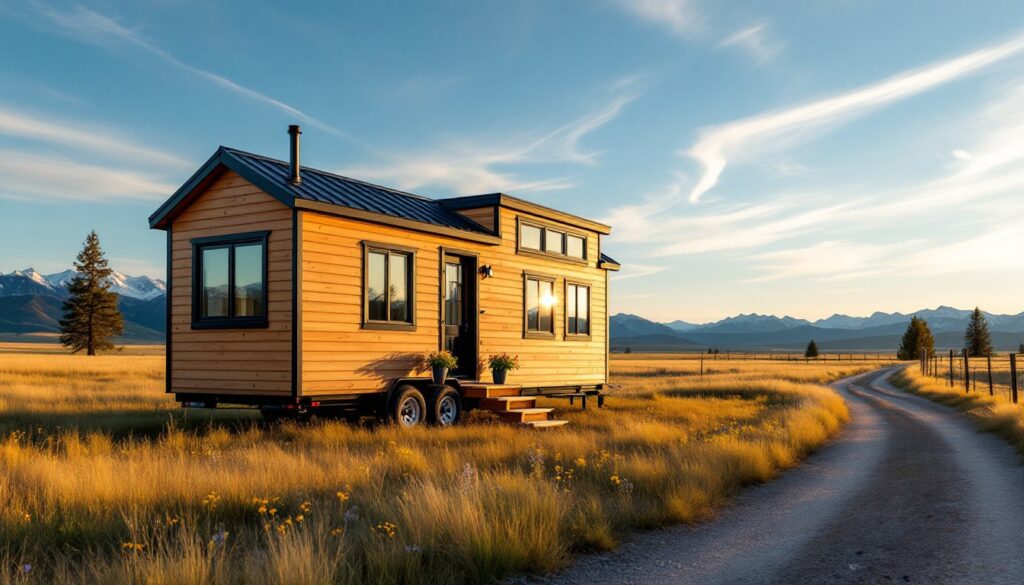
Tiny homes on wheels (THOW) are the most common. These are built on trailers, usually 8.5 feet wide and 20 to 30 feet long, making them towable with a 3/4-ton or 1-ton truck. They’re classified as RVs in most jurisdictions, which opens up some zoning flexibility but can also limit long-term placement on private land. Expect prices from $50,000 to $90,000 new, depending on finishes and off-grid features.
Park model RVs are a step up in size, typically up to 400 square feet, and designed for semi-permanent installation. They meet ANSI A119.5 standards, which means they’re built like RVs but feel more like traditional homes inside. These often include full kitchens, lofted bedrooms, and porches. They range from $60,000 to $120,000 and require a foundation or blocking system once sited.
Permanent tiny homes on foundations are stick-built or modular structures under 600 square feet. These must meet International Residential Code (IRC) Appendix Q standards (where adopted) and local building codes. They’re real property, which makes financing and permitting easier but limits mobility. Costs run $80,000 to $150,000 depending on materials and site prep.
Prefab and modular tiny homes are factory-built in sections, then delivered and assembled on-site. Builders like Amish-built tiny home companies offer well-insulated, durable options with traditional joinery and quality finishes. Prefab models streamline construction timelines and often include warranties.
Where to Find Tiny Homes for Sale in Montana
Montana doesn’t have a single centralized tiny home marketplace, so buyers need to cast a wide net.
Local builders and custom fabricators are the most reliable source for new builds. Companies like Tumbleweed Tiny Houses, Mint Tiny Homes, and regional Montana builders can customize layouts and specs for cold-weather performance. Expect lead times of 3 to 6 months for a custom build.
RV dealerships occasionally carry park models and THOWs. Dealerships near Billings, Great Falls, and Missoula stock units that meet Montana’s climate demands, and some offer financing through RV lenders.
Online marketplaces like Tiny House Listings, Facebook Marketplace, and Craigslist Montana have used inventory. Prices can be attractive, $30,000 to $60,000 for a used THOW, but buyers should inspect thoroughly for water damage, mold, axle rust, and code compliance. Bring a contractor or experienced tiny home owner along for the walkthrough.
Tiny home communities and land-lease developments sometimes sell homes directly or offer rent-to-own arrangements. A few Montana communities now cater specifically to tiny home residents, with shared amenities and pre-approved zoning. According to design and real estate trends covered by Curbed, these planned developments are growing in mountain and rural markets.
Out-of-state builders will deliver to Montana, but factor in transportation costs, $3 to $5 per mile for a THOW over 10,000 pounds. Also confirm the builder uses materials and insulation suitable for Zone 6 or 7 climates per the IRC climate zone map.
Top Montana Regions for Tiny Home Buyers
Different parts of Montana offer different advantages depending on lifestyle, climate tolerance, and budget.
Missoula and the Bitterroot Valley are popular with younger buyers and remote workers. Missoula has a university vibe, access to outdoor recreation, and a relatively mild climate by Montana standards. Land prices are higher, $5,000 to $15,000 per acre, but zoning in Missoula County allows accessory dwelling units (ADUs) on some residential parcels, which can include tiny homes on foundations.
Bozeman and Gallatin County attract outdoor enthusiasts and retirees. It’s one of the pricier markets in the state, with land running $10,000+ per acre near town. But, small space living strategies popular in expensive markets translate well here, and some buyers use a tiny home as a temporary dwelling while building a larger home on the same lot.
Flathead Valley (Kalispell, Whitefish, Columbia Falls) sits near Glacier National Park and Flathead Lake. It’s a four-season area with strong tourism and good infrastructure. Zoning varies widely, some areas welcome RVs and THOWs, others don’t. Buyers shopping in this region should confirm placement rules before purchasing land.
Eastern Montana (Miles City, Glendive, Wolf Point) offers the lowest land costs, sometimes under $2,000 per acre, and fewer zoning restrictions. It’s remote, with harsher winters and limited services, but ideal for off-grid setups and buyers who prioritize solitude. Wind and solar resources are excellent on the high plains.
Helena and the surrounding area balance access to state government services, moderate climate, and affordable land. It’s a practical choice for buyers who want a mix of small-town amenities and rural placement options.
Montana Zoning Laws and Tiny Home Regulations
Montana has no statewide zoning code, so regulations are set at the county and city level. This creates a patchwork of rules that vary significantly.
RV and THOW placement: Many rural counties allow RVs (including THOWs) on private land for a limited time without a permit, often 120 to 180 days per year. To stay year-round, buyers may need to apply for a conditional use permit or variance. Some counties treat THOWs as accessory structures if they’re on a permanent foundation and meet setback requirements.
Permanent tiny homes: If a tiny home is built on a foundation, it must comply with the IRC and local building codes. Montana adopted IRC Appendix Q in some jurisdictions, which provides a code framework for homes as small as 120 square feet. Buyers should check with the local building department before purchasing land or beginning construction. Understanding local zoning requirements is critical to avoid costly mistakes.
Septic and utilities: Off-grid setups with composting toilets and graywater systems are common, but some counties require a septic permit even for tiny homes. If connecting to a well, Montana requires a well permit and water rights documentation. Electrical work must meet National Electrical Code (NEC) standards, and many counties require an inspection even for off-grid solar systems.
Permits: Expect to pull a building permit for a foundation-based tiny home. For THOWs on private land, securing the right permits depends on local definitions, some counties classify them as temporary structures, others as RVs. Call the county planning office early in the process.
Homeowners associations and deed restrictions: If buying land in a subdivision, check the covenants. Many HOAs prohibit tiny homes or RVs outright. Rural land without HOA oversight offers the most flexibility.
Financing Your Montana Tiny Home Purchase
Financing a tiny home is trickier than a conventional mortgage, but options exist.
RV loans are the most common route for THOWs and park models. Lenders like Lightstream, Bank of the West, and local credit unions offer RV loans with terms of 10 to 20 years and interest rates between 6% and 10%, depending on credit. These are personal property loans, so they don’t require a land appraisal.
Personal loans work for smaller purchases or used homes. Rates are higher, 8% to 14%, and terms shorter, but approval is faster. Buyers with good credit can secure $30,000 to $60,000 through online lenders or credit unions.
Construction loans or chattel mortgages apply to custom-built tiny homes on foundations. If the home is permanently affixed to land the buyer owns, some regional banks will write a mortgage. But, the home typically needs to meet minimum square footage requirements (often 400+ square feet) and appraise for at least $50,000.
Cash purchases are common in the tiny home market. Many buyers sell a larger home, liquidate savings, or use proceeds from land sales to buy outright. Cash offers also give negotiating leverage with private sellers.
Rent-to-own or seller financing occasionally pops up in classified ads and tiny home communities. Terms vary widely, so buyers should have a real estate attorney review the contract before signing.
For those exploring comparable markets or researching typical expenses, a detailed cost breakdown can help set realistic budget expectations. Don’t forget to budget for land, site prep, utility hookups, permits, and insurance, these can add $10,000 to $30,000 on top of the home purchase price.
Conclusion
Montana offers an ideal backdrop for tiny home living, affordable land, spectacular scenery, and a culture that values independence. But success depends on doing the assignments upfront: understanding local zoning, choosing the right type of tiny home for the climate, and lining up financing early. Whether someone’s drawn to a cozy shell build or a turnkey park model, the key is matching the home to the lifestyle and the land to the regulations. With the right planning, a tiny home in Montana can deliver big freedom under even bigger skies.