Table of Contents
ToggleCharlotte’s real estate market is booming, but so is the appetite for downsized living. If you’re hunting for a tiny house for sale in Charlotte NC, you’re entering a surprisingly robust market where southern charm meets compact design. This isn’t about ditching amenities, it’s about smarter square footage, lower overhead, and mobility. Charlotte’s blend of urban energy and nearby rural land makes it one of the better East Coast cities for tiny house buyers. But navigating zoning rules, finding reputable builders, and understanding what you’re actually buying requires more than browsing Facebook Marketplace at midnight. This guide walks through where to look, what to expect in price and style, and the regulatory hoops you’ll need to clear before parking that dream home on a foundation or trailer.
Key Takeaways
- The Charlotte NC tiny house market offers 150–350 sq ft turnkey models priced at $40,000–$90,000, making it an attractive option for remote workers, retirees, and buyers priced out of traditional homes.
- Zoning laws vary significantly across Charlotte and surrounding counties; check whether your desired location allows ADUs, trailer-based homes, or manufactur homes before purchasing a tiny house for sale in Charlotte NC.
- RVIA-certified tiny houses on wheels can be financed through RV loans (5–15 years at 6–10%), while foundation-based tiny houses may qualify for personal loans, chattel loans, or land loans depending on your credit and down payment.
- Inspect used models for water damage, tire condition, and appliance functionality, and verify that siding (LP SmartSide or fiber cement), insulation (closed-cell spray foam), and framing meet North Carolina’s humid climate standards.
- Regional builders like Wind River Tiny Homes and Tiny House Building Company deliver RVIA-certified models that simplify zoning classification and financing, while local dealers and tiny house communities provide opportunities to tour models before committing.
Why Charlotte Is a Hot Market for Tiny House Living
Charlotte sits at the intersection of growth and affordability, at least compared to coastal metros. The city’s population has surged past 900,000, and with that growth comes both rising rents and a hunger for alternative housing.
Tiny houses appeal to remote workers, retirees downsizing from suburban McMansions, and younger buyers priced out of traditional single-family homes. Charlotte’s climate is another win: mild winters mean less insulation overkill and lower heating bills, while summer heat is manageable with a mini-split HVAC system (typically 12,000–18,000 BTU for a 100–400 sq ft space).
The surrounding counties, Mecklenburg, Gaston, Union, Cabarrus, offer a mix of zoning environments. Some townships allow ADUs (accessory dwelling units) on existing lots, while rural parcels outside city limits sometimes permit tiny houses as primary residences or RVs with few restrictions. That regulatory patchwork creates opportunity if you know where to look.
Proximity to outdoor recreation (Lake Norman, Uwharrie National Forest) and a relatively permissive building culture also help. Unlike stricter markets in California or the Northeast, North Carolina’s general ethos leans toward property rights, though that doesn’t mean you can skip navigating local permits entirely.
Where to Find Tiny Houses for Sale in Charlotte NC
Online Marketplaces and Specialty Builders
The digital hunt starts on Tiny House Listings, Zillow, and Facebook Marketplace. Filter by “manufactured home,” “tiny house,” or “RV” and set your radius to 50–100 miles around Charlotte. You’ll find everything from half-finished DIY projects to turnkey models from regional builders.
Several North Carolina–based builders ship to Charlotte or maintain show homes in the area. Wind River Tiny Homes (based in Chattanooga but active in NC), Tiny House Building Company (Asheville), and Modern Tiny Living (Columbus, OH, with Carolina delivery) all offer RVIA-certified models on trailers, which simplifies some zoning issues since they’re classified as RVs.
Check Craigslist Charlotte and TinyHouseListings.com weekly, inventory turns over fast. Expect to see 200–400 sq ft models ranging from bare-shell kits to fully outfitted homes with composting toilets, propane appliances, and off-grid solar arrays. Similar markets in other states show strong variety, as seen with tiny homes in other regions.
ImproveNet also lists contractor-built tiny homes and can connect buyers with local builders who specialize in custom ADUs or park model RVs.
Local Dealers and Model Home Lots
Charlotte has a handful of dealers showcasing park models and manufactured tiny homes. Tiny Estates (a tiny house community developer) sometimes lists resale units in their communities. Lake Norman RV and other recreational vehicle dealers occasionally carry park model RVs, essentially tiny houses built to RV standards (400 sq ft max, towable chassis).
Visiting a model lot lets you check build quality firsthand. Look for LP SmartSide or fiber cement siding (better than T1-11 in humid climates), spray foam insulation (closed-cell R-6 to R-7 per inch), and residential-grade windows (double-pane, Low-E). Trailer-based homes should have a dual-axle chassis rated for the finished weight, with electric brakes and a breakaway system.
Some builders offer rent-to-own terms or financing packages, which we’ll cover later. If you’re comparing models, bring a tape measure and check ceiling height (most range from 10’6″ at the loft peak to 6’8″ in main living areas), door widths (30″ is standard, but 32″ feels less cramped), and whether the plumbing and electrical are RV-spec or residential-grade.
What to Expect: Pricing and Styles in the Charlotte Area
As of 2026, turnkey tiny houses in the Charlotte market run $40,000–$90,000 for 150–350 sq ft, depending on finishes and whether the unit is RVIA-certified. DIY shell kits or unfinished models start around $15,000–$25,000, but you’ll invest significant sweat equity (and potentially another $10,000–$20,000 in materials) to make them livable.
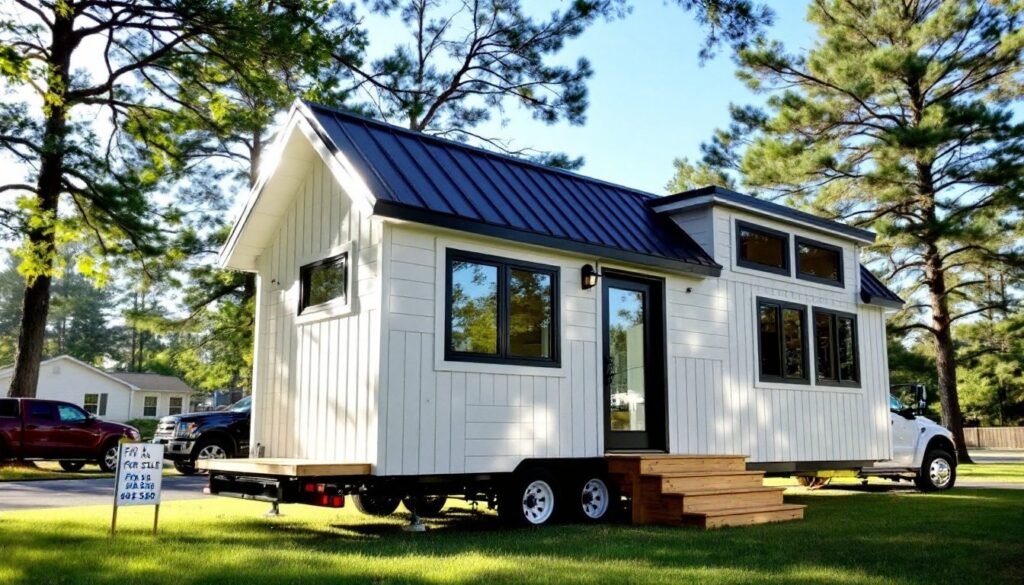
Popular styles include modern farmhouse (board-and-batten siding, metal roofing, shiplap interiors), Scandinavian minimalist (light wood, clean lines, lots of windows), and rustic cabin (reclaimed wood, log accents, darker palettes). Exterior materials matter in North Carolina’s humidity: metal roofing (standing seam or corrugated) sheds water better than asphalt shingles and lasts 40+ years. Avoid untreated pine siding unless you’re committed to annual staining.
Interior layouts typically feature:
- Sleeping loft (accessible by ladder or stairs, 30–60 sq ft)
- Main floor with kitchen, bath, and living area (80–150 sq ft)
- Storage loft opposite the sleeping loft (optional)
- Bathroom (3×5 ft to 4×6 ft, with a composting toilet or standard flush, plus a 32″×32″ shower stall)
Kitchens usually include a two-burner propane cooktop, apartment-size fridge (10–12 cu ft), and a compact sink (15″×15″ or bar-prep size). Some builders integrate full-size appliances if the layout allows. Understanding the full scope of expenses helps, as detailed in a typical cost breakdown for tiny homes.
Pricing variables:
- Off-grid vs. grid-tied: Adding solar panels (1–3 kW system), a battery bank, and propane tank raises costs by $8,000–$15,000.
- Trailer vs. foundation: Trailers (steel, dual-axle) add $4,000–$7,000 but preserve mobility.
- Custom vs. stock plans: Custom builds can push prices past $100,000 if you’re adding high-end finishes (quartz counters, hardwood floors, designer fixtures).
Used tiny houses pop up for $25,000–$50,000, but inspect them like you would any used RV, check for water damage, tire condition (if trailer-mounted), and whether appliances and systems work.
Zoning, Regulations, and Where You Can Place Your Tiny House
This is where the dream hits the paperwork. Zoning is the single biggest hurdle for tiny house buyers in Charlotte and surrounding counties.
Inside Charlotte city limits, tiny houses on foundations may qualify as ADUs (accessory dwelling units) if the lot meets minimum size requirements (typically 5,000–7,000 sq ft) and the primary dwelling exists. ADUs can’t exceed a certain percentage of the main home’s square footage (often 30–50%). You’ll need a building permit, and the structure must meet International Residential Code (IRC) standards, meaning proper egress windows, minimum ceiling heights (6’8″ in habitable rooms, 6’4″ in bathrooms), and code-compliant electrical (NEC) and plumbing.
Tiny houses on wheels (THOWs) are murkier. Legally, they’re often classified as RVs, which means you can’t park one as a permanent dwelling in most residential zones. Exceptions exist:
- RV parks and campgrounds: Some allow long-term or permanent residents. Check park rules and whether they offer mail service and utility hookups (30- or 50-amp electric, water, sewer).
- Tiny house communities: A few developments in the Charlotte area (like Tiny Estates or private land co-ops) are purpose-built for THOWs and handle zoning collectively.
- Rural parcels: In unincorporated areas of Gaston, Union, or Cabarrus counties, zoning enforcement is lighter. Confirm with the county planning office whether your parcel allows “manufactured homes” or “recreational vehicles” as primary residences. Some counties require a septic permit and well if you’re off-grid.
Foundation-based tiny houses (not on trailers) are simpler to permit in many townships, since they’re treated like any other small dwelling. You’ll need:
- Foundation permit (slab, crawlspace, or pier-and-beam)
- Building permit (plan review, inspections during framing, rough-in, and final)
- Septic permit (if not on municipal sewer)
- Electrical and plumbing inspections (licensed contractors may be required)
Permit costs in Mecklenburg County run $500–$2,000 depending on project scope. Budget 4–8 weeks for plan review and approval. Ignoring legal considerations can lead to fines or orders to relocate the structure.
Financing Your Tiny House Purchase in North Carolina
Traditional mortgages don’t cover tiny houses on wheels, and most banks won’t underwrite a structure under 400 sq ft or without a permanent foundation. Here are your options:
RV loans: If your tiny house is RVIA-certified, you can apply for an RV loan through lenders like LightStream, Southeast Financial, or credit unions. Terms run 5–15 years, with rates around 6–10% (as of early 2026). You’ll need decent credit (usually 650+) and a down payment of 10–20%.
Personal loans: Unsecured personal loans cover $15,000–$50,000 at higher interest rates (8–15%), but they’re faster to close and don’t require the home to meet specific standards. Upstart, SoFi, and local credit unions offer competitive rates.
Chattel loans: For manufactured homes (including some park models), chattel loans work similarly to auto loans, using the structure as collateral without requiring land ownership. Rates are typically higher than traditional mortgages (7–12%).
Builder financing: Some tiny house builders offer in-house financing or lease-to-own programs. Read the fine print, interest rates can be steep, and missed payments may result in repossession.
Cash: Paying outright avoids interest and streamlines the process. Many buyers sell a traditional home, downsize, and use the equity to buy a tiny house outright. Listings on Curbed often highlight cash-heavy tiny house markets driven by equity refugees from high-cost metros.
Land loans: If you’re buying land and a tiny house, you may need separate financing. Land loans require 20–50% down and have shorter terms (10–15 years). Some lenders will bundle construction loans if you’re building on-site, but that usually applies to stick-built or foundation-based homes.
Peer-to-peer lending: Platforms like Prosper or Funding Circle connect borrowers with individual investors. Rates vary widely based on your credit profile.
Home equity line of credit (HELOC): If you already own property, a HELOC can fund your tiny house purchase at lower rates (5–8%), using your existing home as collateral.
Before committing, calculate total cost of ownership: purchase price, land (if applicable), utility hookups (electric panel upgrade, water/sewer tap fees), ongoing insurance (RV policies run $600–$1,200/year: homeowners’ policies for foundation-based tiny houses are similar), property taxes (varies by county: some classify tiny houses as personal property, others as real estate), and maintenance reserves. Small-space living tips from Apartment Therapy can also help maximize your compact footprint once you’re moved in.
Final word: Shop around. Some North Carolina credit unions (like State Employees’ Credit Union or Truliant Federal Credit Union) have experience with alternative housing and may offer better terms than national lenders. Always get pre-approved before making an offer, tiny house sellers move quickly, and cash-equivalent financing puts you ahead of browsers.