Table of Contents
ToggleTiny beetles in the house aren’t just a nuisance, they’re a signal that something’s providing food, shelter, or both. These pests are surprisingly destructive for their size, feeding on everything from natural fibers to pantry staples. Homeowners often spot one or two and brush it off, only to discover holes in wool rugs or larvae in the spice cabinet months later. The good news? Most tiny beetle infestations are preventable and manageable with the right approach, some persistence, and a bit of detective work. This guide covers the most common household beetles, how to confirm you’ve got a problem, and practical steps to eliminate them without calling in the pros, unless the situation warrants it.
Key Takeaways
- Tiny house beetles like carpet beetles and pantry pests are preventable and manageable with proper identification, sanitation, and targeted treatment strategies.
- Carpet beetle larvae cause the most damage by feeding on keratin in wool, fur, and leather, while drugstore and cigarette beetles destroy stored food products by boring through packaging.
- Early detection is critical—look for irregular holes in textiles, exit holes in food packaging, cast skins, and fecal pellets to confirm an infestation before it escalates.
- Prevention through airtight storage, regular vacuuming, structural sealing, and freezing thrifted items at 0°F for 72 hours is far more effective than dealing with established infestations.
- DIY elimination involves discarding infested items, deep-cleaning affected areas, applying food-grade diatomaceous earth or boric acid, and monitoring with sticky traps for 60 days.
- If tiny house beetles persist after two months of treatment or hide in wall voids and HVAC systems, contact a licensed pest control professional for structural assessment and stronger treatment options.
What Are Tiny House Beetles?
Tiny house beetles refer to several beetle species that measure 1/16 to 1/4 inch in length and commonly infest residential structures. They differ from larger wood-boring beetles or outdoor species, these are interior pests that thrive in human environments.
Most belong to families that feed on organic materials: animal-based fibers like wool or silk, plant-based starches in food products, or dead insect matter. Adults often go unnoticed because they’re small and tend to hide in cracks, under baseboards, or inside stored items. The real damage comes from larvae, which are voracious feeders during their development stage.
Unlike termites or carpenter ants, tiny beetles don’t compromise structural integrity, but they wreak havoc on textiles, food stores, and personal belongings. Identifying the specific beetle type is critical because treatment varies, what works for carpet beetles won’t necessarily eliminate pantry pests.
Common Types of Tiny Beetles Found in Homes
Carpet Beetles
Carpet beetles (Anthrenus and Attagenus species) are among the most destructive household beetles. Adults measure 1/16 to 1/8 inch, are oval-shaped, and display mottled black, white, brown, or orange patterns depending on the species. The varied carpet beetle is the most common.
Larvae cause the damage. These 1/4-inch, bristly, carrot-shaped grubs feed on keratin, a protein found in wool, fur, feathers, leather, and even pet hair. They’ll chew irregular holes in carpets, clothing, upholstery, and taxidermy. Unlike moths, carpet beetle larvae leave behind cast skins and fecal pellets that resemble tiny pepper grains.
Adults emerge in spring and are often spotted on windowsills seeking light and mates. They don’t damage materials but lay eggs in hidden areas near food sources. A single female can deposit 50 to 100 eggs in lint accumulations, air ducts, or under baseboards. Homeowners dealing with carpet beetle infestations should focus on both larvae and breeding sites.
Drugstore and Cigarette Beetles
Drugstore beetles (Stegobium paniceum) and cigarette beetles (Lasioderma serricorne) are pantry pests measuring 1/10 to 1/8 inch. Both are reddish-brown, cylindrical, and capable of infesting a shocking range of stored products.
Drugstore beetles will bore into almost anything organic: flour, cereals, spices, dried flowers, leather-bound books, pet food, and even prescription drugs. Cigarette beetles prefer tobacco products, dried herbs, and spices but aren’t picky if conditions are right.
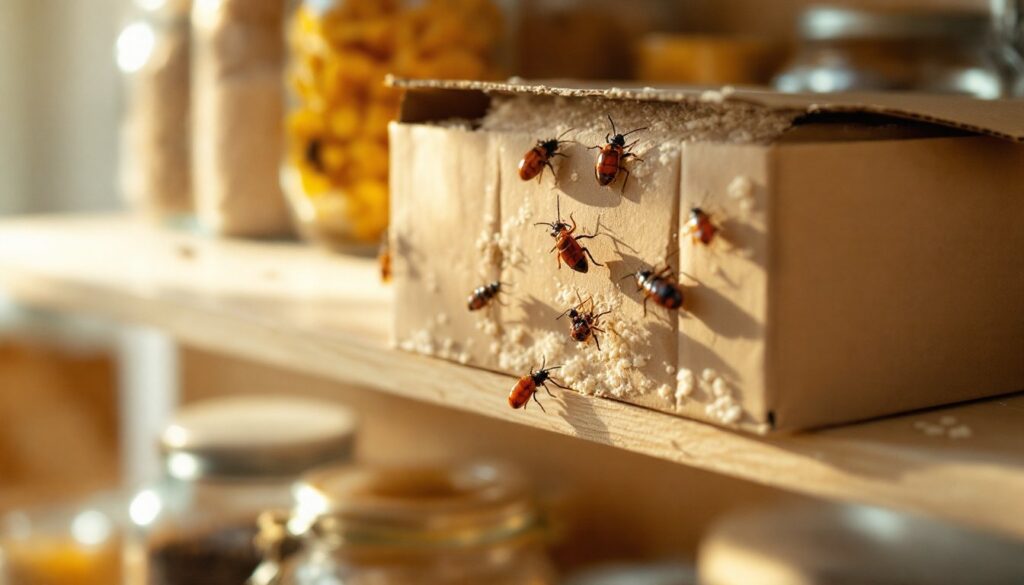
Larvae are white, C-shaped grubs that tunnel through packaging, including cardboard, plastic bags, and foil. Infested products often contain webbing, frass (sawdust-like waste), and tiny exit holes where adults emerged. Both species thrive in warm, humid environments, which is why they’re more active in summer or near heating sources.
How to Identify Tiny Beetle Infestations in Your Home
Confirmation starts with finding the beetles, or evidence of them. Adult beetles near windows, on walls, or in light fixtures are your first clue. Check areas where organic materials accumulate:
- Carpets and rugs: Look for irregular holes, thinning fibers, or shedding along edges. Flip back corners to inspect for larvae or cast skins.
- Closets and drawers: Examine wool, silk, or fur garments for damage, especially in dark folds or storage boxes.
- Pantry shelves: Open every sealed container. Check for exit holes in packaging, live larvae, webbing, or adult beetles crawling inside cabinets.
- Baseboards and vents: Use a flashlight to inspect cracks, cold air returns, and the edges of wall-to-wall carpeting where lint collects.
Larvae are the smoking gun. Carpet beetle larvae are bristly and mobile: pantry beetle larvae are smooth and usually found inside food products. Sticky traps placed in suspected areas can help confirm activity and identify high-traffic zones.
Don’t confuse these with other common household insects. Bed bugs are flatter and feed on blood: silverfish are teardrop-shaped and much faster. If you’re seeing damage but no insects, save a specimen in a sealed bag for identification. Proper ID drives the treatment plan.
Effective Prevention Strategies for Homeowners
Prevention beats extermination every time. Beetles enter homes through open doors, windows, and gaps in siding or foundation, or they’re introduced via infested items. Cut off their food and breeding grounds:
Storage and sanitation:
- Store woolens, blankets, and seasonal clothing in airtight plastic bins with tight-fitting lids, cardboard boxes aren’t beetle-proof.
- Vacuum regularly, focusing on edges, under furniture, and inside closets. Empty the canister or bag outside immediately.
- Clean or freeze thrift store finds, vintage rugs, and taxidermy before bringing them indoors. A 72-hour freeze at 0°F kills eggs and larvae.
- Rotate and inspect pantry items every few months. Transfer dry goods into glass or heavy plastic containers with screw-top lids.
Structural maintenance:
- Seal cracks around baseboards, windows, and door frames with caulk.
- Install door sweeps on exterior doors and repair torn window screens.
- Clean out air ducts and cold air returns annually, lint and pet hair are prime nesting material.
Outdoor habits:
- Don’t store birdseed, pet food, or natural fiber items in garages or sheds unless they’re sealed. Beetles thrive in these spaces during warm months.
- Keep outdoor lighting away from entry doors to reduce attraction.
For homes with persistent issues, consider consulting resources on effective home improvement strategies that integrate pest prevention into routine maintenance schedules.
DIY Methods to Get Rid of Tiny House Beetles
Once you’ve confirmed an infestation, act quickly. Beetles reproduce fast, and a small problem can escalate.
Step 1: Locate and discard infested materials.
For pantry beetles, throw out every opened or suspect food item. Don’t try to salvage flour or cereal, the eggs are microscopic. Wipe down shelves with hot, soapy water, then follow with a vinegar solution to remove residues.
For carpet beetles, remove and launder affected textiles in hot water (130°F minimum) or dry-clean. Items that can’t be washed should be frozen for at least a week or sealed in black plastic bags and left in direct sunlight on a hot day (internal temp must exceed 120°F).
Step 2: Deep-clean affected areas.
Vacuum thoroughly using a crevice tool to reach baseboards, carpet edges, and upholstered furniture seams. Steam cleaning carpets and drapes can kill larvae and eggs in fibers. Dispose of vacuum contents in an outdoor trash bin immediately.
Step 3: Apply targeted treatments.
- Diatomaceous earth (food-grade): Dust lightly in cracks, under appliances, and along baseboards. It dehydrates insects on contact. Wear a dust mask during application, DE is a respiratory irritant.
- Boric acid powder: Effective in pantries and closets, but toxic to pets and children. Apply sparingly in areas they can’t access.
- Insect growth regulators (IGRs): Products containing methoprene or pyriproxyfen disrupt beetle development. These are low-toxicity options for long-term control.
Avoid foggers or bug bombs, they don’t penetrate cracks where beetles hide and can contaminate food surfaces.
Step 4: Monitor and repeat.
Place fresh sticky traps every 2-3 weeks to gauge whether the population is declining. Reinspect storage areas monthly for six months. Beetle life cycles can span several months to a year, so patience is essential.
When to call a pro:
If infestations persist after 60 days of diligent treatment, or if beetles are concentrated in wall voids or HVAC systems, contact a licensed pest control operator. They have access to stronger insecticides and can treat inaccessible areas safely. Structural infestations, especially in multi-unit buildings, often require professional-grade equipment and follow-up.
Safety note: Always wear gloves, goggles, and a mask when handling pesticides or dusts. Keep products in original containers, follow label instructions to the letter, and store them out of reach of children and pets. For additional guidance on safe DIY pest control, many home and garden resources offer step-by-step tutorials tailored to specific pest types.
Beetle problems are solvable, but they demand consistency. Miss one hiding spot or skip follow-up inspections, and you’re back to square one.