Table of Contents
ToggleTiny house living doesn’t have to drain your savings. With prices ranging from under $10,000 for DIY shells to $80,000 for turnkey models, affordable options exist for nearly every budget. The trick is knowing where to look, what corners can be cut without compromising safety, and which “bargains” will cost more in the long run. This guide cuts through the hype to show what’s actually available in the cheap tiny house market, what to watch for, and how to avoid the costly mistakes that turn a budget purchase into a money pit.
Key Takeaways
- Cheap tiny houses range from under $10,000 DIY shells to $50,000 turnkey models, with pricing tiers offering different levels of completion and labor requirements.
- RVIA or NOAH certification is essential when buying a cheap tiny house for sale, as it ensures code compliance and enables insurance and legal placement in most communities.
- Tiny houses on wheels (THOW) offer mobility and potential tax advantages, but buyer-built models require inspecting trailer quality, frame welds, and proper weight ratings to avoid structural problems.
- Hidden costs beyond the purchase price—including land prep, permits, utility hookups, and transportation—can add $10,000–$30,000, so budget accordingly before committing.
- Local builders and Amish-built tiny homes often undercut national prices by 20–30% through reduced shipping and labor costs, while online marketplaces like Facebook and Craigslist offer used units at 30–50% discounts.
- Prioritize moisture barriers, proper insulation (R-13 walls minimum), dual-pane windows, and PEX/copper plumbing to avoid costly repairs that turn a bargain purchase into a long-term money pit.
What Makes a Tiny House “Cheap”? Understanding Pricing Tiers
In 2026, “cheap” in the tiny house world typically means anything under $50,000. But that number covers a wide range of quality, features, and build stages.
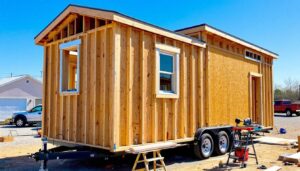
Budget tier ($5,000–$20,000): Usually DIY shell kits, unfinished trailers with framing, or used models needing significant work. You’re buying raw materials and doing most of the labor yourself. Expect to handle electrical, plumbing, insulation, and finish work. These require solid carpentry skills and access to tools.
Mid-budget tier ($20,000–$40,000): Semi-finished models from smaller builders, or certified pre-owned units. Framing, sheathing, and roofing are done. You’ll finish interior walls, install fixtures, and handle utilities. Some include basic electrical rough-in.
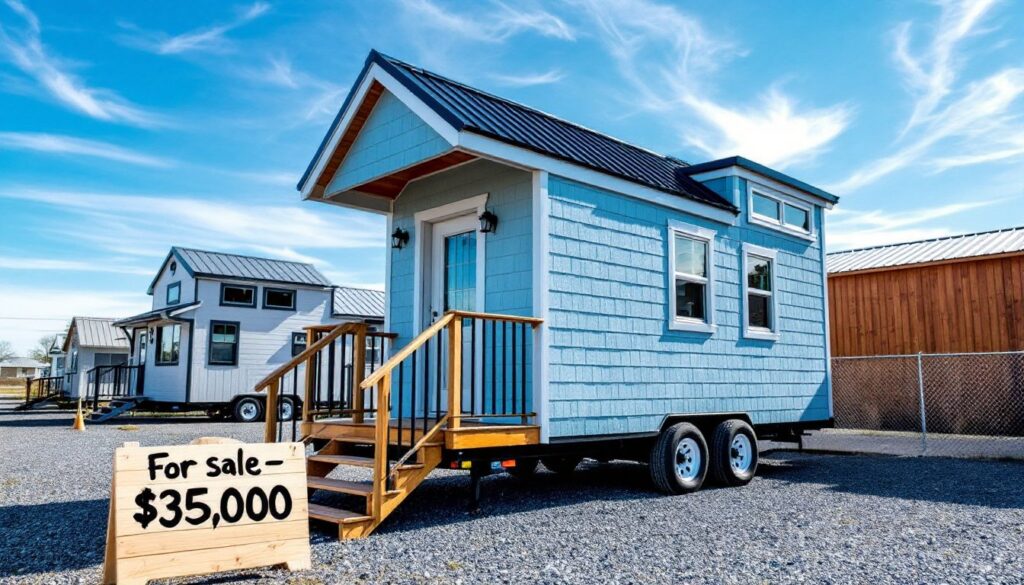
Affordable turnkey tier ($40,000–$50,000): Completed homes from volume builders or simplified floor plans. These meet basic building codes, include appliances, and are move-in ready. They cut costs through standard layouts, economy materials (vinyl windows, laminate counters, basic fixtures), and minimal customization.
The tiny home cost breakdown includes trailer, framing materials, exterior siding, roofing, windows, insulation, interior finishes, and systems. Builders save money by using stock sizes, thinner wall construction (2×3 studs instead of 2×4), and prefab components.
Where to Find Affordable Tiny Houses for Sale
Online Marketplaces and Specialty Retailers
Tiny House Listings and similar aggregators pull inventory from multiple builders. Filter by price, size, and certification status. Many listings include RVIA certification (important for financing and insurance) and whether the unit is on a permanent foundation or trailer.
Facebook Marketplace and Craigslist often have used tiny houses or owner-built models. Prices run 30-50% below new builds, but expect to do your own inspection. Look for water damage around windows, roof penetrations, and wheel wells. Check frame welds if it’s trailer-mounted.
Amazon and home improvement retailers now carry prefab cabin kits and tiny house shells in the $8,000–$25,000 range. These ship flat-packed. You’ll need a crew to assemble the structure and a contractor for utilities if you’re not experienced with residential systems.
Platforms like Houzz showcase tiny house builders and allow you to browse completed projects, though most listings skew toward higher-end custom builds. Use it to identify builders, then contact them directly about economy models.
Local Builders and Custom Options
Regional builders often beat national companies on price because they avoid shipping costs. A tiny house on a trailer can cost $3,000–$6,000 to transport across the country.
Ask local builders about “spec” models, units built without a buyer, sold at a discount to free up shop space. You’ll have no say in finishes, but savings can hit 20%.
Amish-built tiny homes deliver exceptional craftsmanship at competitive pricing due to lower labor overhead. Expect traditional techniques, solid wood construction, and minimal use of engineered materials. Trade-off: fewer modern design features and longer lead times.
Some builders offer “builder-assist” programs where you complete finish work under supervision, cutting $10,000–$15,000 from the total cost. You’ll handle painting, flooring, trim, and fixture installation while they manage structural and code-critical work.
Budget-Friendly Tiny House Types and Styles
THOW (Tiny House on Wheels): The most common budget option. Built on a double-axle or gooseneck trailer (typically 20–24 feet). Trailer alone costs $4,500–$7,000, but you gain mobility and often avoid property taxes. Most states classify them as RVs if under 400 square feet and RVIA-certified.
Shed-to-tiny-house conversions: Pre-built sheds (10×20 or 12×24) start around $5,000. You add insulation, windows, utilities, and interior finishes. Total cost typically stays under $20,000 if you DIY. Check local codes, many jurisdictions require permanent foundations for habitable structures.
Shipping container homes: A single 20-foot container costs $2,000–$4,000. Figure another $15,000–$30,000 for insulation, interior framing, windows, and systems. Containers need spray foam insulation and interior framing to meet building codes. They’re nearly indestructible but require welding equipment for modifications.
Park model RVs: Factory-built units designed for permanent or semi-permanent placement. Prices start around $35,000 for basic 400-square-foot models. Built to ANSI standards rather than IRC, which affects financing and placement options. Many RV parks and tiny house communities accept them.
Prefab cabins: Manufacturers like Studio Shed and similar companies offer insulated shells starting at $15,000. You finish the interior. They ship in sections, assemble in a day with a small crew, and meet IRC codes if placed on proper foundations. Good option if you have land but limited construction experience, as discussed in pieces on eco-friendly tiny homes using sustainable materials.
What to Look for When Buying a Cheap Tiny House
Certification and code compliance: NOAH or RVIA certification means the build was inspected. Without certification, you’ll struggle to get insurance or park it legally in most communities. If it’s a permanent structure, ask for receipts showing permitted electrical and plumbing work.
Trailer and frame quality (for THOW): Check the Vehicle Identification Number (VIN) and weight rating. A 24-foot tiny house fully loaded weighs 10,000–14,000 pounds. The trailer should be rated for at least 14,000 GVWR. Inspect welds, axles, and tongue for cracks or rust. Tires should be load-range D or E, not passenger-rated.
Framing and structural integrity: Look for 2×4 or 2×6 wall studs on 16-inch centers minimum. Cheaper builds use 2x3s on 24-inch centers, fine for a shed, inadequate for a home with weather exposure. Roof framing should use at least 2×4 rafters. Check for sagging or bounce when you walk.
Moisture barriers and insulation: Properly built tiny houses have house wrap or tar paper under siding, and roof underlayment. Pull back a small section of trim to verify. Insulation should be R-13 minimum in walls, R-30 in ceilings. Spray foam is best for tiny houses due to air sealing, but costs more. Fiberglass batts are acceptable if vapor barriers are installed correctly.
Windows and doors: Vinyl windows are fine for budget builds, but check for dual-pane glazing. Single-pane won’t cut it in most climates. Exterior doors should be steel or fiberglass with weatherstripping. Ensure they latch and seal properly.
Electrical and plumbing systems: Minimum 100-amp service if it’s a permanent structure, 50-amp RV hookup for mobile units. Breaker panel should be labeled. Plumbing should use PEX or copper, avoid polybutylene (gray plastic, prone to failure). Check under sinks and around the toilet for leaks or staining. Understanding tiny house legal considerations helps ensure your purchase complies with local zoning and safety codes.
Hidden Costs and Ongoing Expenses to Consider
Land and site prep: Unless you’re parking in an existing tiny house community, budget $5,000–$15,000 for site work. This includes grading, utility hookups (water, electric, sewer or septic), and possibly a concrete pad or pier foundation. Rural land is cheaper but may require a well ($3,000–$10,000) and septic system ($3,500–$10,000).
Permits and inspections: Foundation permits run $200–$800 depending on jurisdiction. Electrical and plumbing permits add another $150–$400 each. If you’re placing a THOW on your property, check zoning, many areas require it to be classified as an ADU (accessory dwelling unit), which means additional permitting.
Utilities and hookups: Extending electric from the street costs $1,000–$3,000 per pole if you’re beyond easy reach. Water line extensions run $30–$50 per linear foot. Budget an extra $2,000–$5,000 if you’re more than 100 feet from existing service.
Transportation and delivery: Moving a tiny house more than 200 miles typically costs $2–$4 per mile. A cross-country move can add $6,000–$10,000. Oversize permits, pilot cars, and route surveys increase costs. Local moves (under 50 miles) run $500–$1,500.
Insurance: Tiny house insurance costs $600–$1,200 annually. THOW units usually need RV insurance if they’re certified, or specialty tiny house coverage if not. Permanent structures use standard homeowners policies but may face higher rates due to non-standard construction, as noted on Curbed when covering alternative housing trends.
Ongoing maintenance: Budget 1–2% of home value annually. Tiny houses have higher maintenance-to-value ratios due to road wear (if mobile), weather exposure (more surface area per square foot), and systems packed into tight spaces. Roof sealant and trim caulking need checking every 6–12 months to prevent water intrusion.
Climate control: Heating and cooling a tiny house is cheap, often under $50/month, but undersized or poorly chosen systems waste money. A mini-split heat pump ($1,200–$2,500 installed) is most efficient. Avoid space heaters as primary heat: they’re expensive to run and create fire hazards in confined spaces.
Resources like Apartment Therapy offer design ideas that maximize small spaces without increasing costs, while regional listings such as tiny homes for sale in specific markets show real-world pricing and options.