Table of Contents
ToggleBetween 2014 and 2019, a reality TV show convinced thousands of Americans that happiness might be measured in square footage, specifically, under 500 of them. Tiny House Nation didn’t just showcase impossibly small homes: it triggered a cultural shift toward minimalism, financial freedom, and rethinking what “home” actually means. Hosts John Weisbarth and Zack Giffin traveled the country transforming shipping containers, trailers, and salvaged materials into fully functional dwellings, proving that clever design beats sheer size. Whether viewers dreamed of downsizing or just loved watching Murphy beds fold out of staircases, the show became appointment television for DIYers and dreamers alike.
Key Takeaways
- Tiny House Nation ran for five seasons with 88 total episodes between 2014 and 2019, showcasing how clever design transforms homes under 500 square feet into fully functional dwellings.
- The show’s most popular Tiny House Nation episodes feature innovative space-saving solutions like Murphy beds, pocket doors, stair-tread drawers, and dual-purpose furniture that DIYers can adapt to any small space project.
- Streaming all Tiny House Nation episodes is easiest through Netflix (all 5 seasons available), with alternatives including Hulu, Discovery+, Amazon Prime Video, and free ad-supported options on HGTV’s platform.
- Success with tiny house living requires understanding local zoning laws, building codes, and permit requirements—lessons emphasized after some homeowners faced structural issues and legal complications post-show.
- DIYers can apply Tiny House Nation’s core principles to any space project: prioritize precision tools and measurements, match materials to structural load, design dual-purpose surfaces, and prioritize ventilation to prevent moisture problems.
- The show’s legacy extends beyond housing trends, inspiring viewers to embrace minimalism, question possessions, and recognize that limitations often spark the most creative design solutions.
What Is Tiny House Nation and Why Did It Capture America’s Imagination?
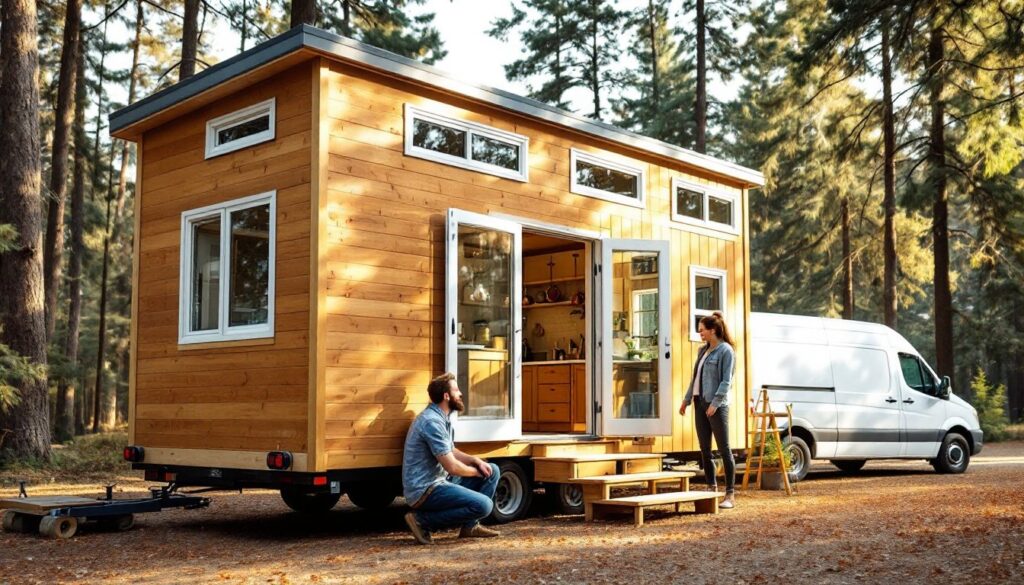
Tiny House Nation premiered on FYI (later A&E) in July 2014, pairing professional contractor Zack Giffin with host John Weisbarth to design and build tiny homes, typically under 400 square feet, for families, couples, and individuals ready to ditch mortgages and clutter. Each episode followed a familiar arc: clients shared their motivations (debt reduction, environmental concerns, wanderlust), Giffin sketched custom floor plans, and the build team transformed the vision into a towering-ceilinged, skylight-studded marvel on wheels or a foundation.
The show’s timing was perfect. The 2008 recession left many Americans questioning the McMansion dream, and social media amplified the appeal of photogenic micro-homes with fold-down desks and hidden wine racks. Giffin’s carpentry skills, often building live on camera, gave the show DIY credibility, while Weisbarth kept the tone upbeat and aspirational. Unlike renovation shows focused on resale value, Tiny House Nation emphasized lifestyle redesign: prioritizing experiences over possessions, mobility over roots.
It also surfaced real challenges. Viewers watched families wrestle with tiny home zoning laws, discover that RV parks don’t always welcome permanent tiny dwellers, and realize that composting toilets require more maintenance than a standard flush system. The show didn’t sugarcoat the trade-offs, no room for a full-size fridge, limited guest space, and the reality that two people in 200 square feet need serious conflict-resolution skills.
How Many Episodes of Tiny House Nation Are There?
The series ran for five seasons with a total of 88 episodes before wrapping in 2019. Season 1 (2014) delivered eight episodes, establishing the format and introducing Giffin’s signature moves, think loft beds over living areas and staircases doubling as drawer banks. Seasons 2 through 5 expanded episode counts as the show gained traction, tackling more ambitious builds: a glass-walled tiny home in the Pacific Northwest, a two-story micro-cottage for a family of four, and even a off-grid tiny house with solar panels and rainwater collection.
Episode length held steady at 42 minutes (standard for cable reality TV), though some streaming platforms later trimmed intros and recaps. The show also spawned tie-in content, including web-exclusive “where are they now” segments and behind-the-scenes footage of Giffin’s workshop. Production quality improved season over season, early episodes featured rougher camera work and tighter timelines, while later seasons incorporated drone shots of completed homes in scenic locations and more detailed explanations of building techniques.
A few special episodes stood out: a “Tiny Townhouse” two-parter explored vertical living in an urban lot, and a “Tiny House on the Range” episode followed a Wyoming couple building on family ranch land. These variations kept the format fresh without straying from the core premise.
Most Popular Tiny House Nation Episodes Worth Watching
Several episodes became fan favorites for their audacious designs or relatable dilemmas. “400 Sq. Ft. Family Reunion” (Season 2) featured a multi-generational build that required separate sleeping zones and a dining table seating six, Giffin’s solution involved a fold-out table mounted to a load-bearing wall and bunk beds with privacy curtains. “Tiny House, Big Views” (Season 3) showcased a Colorado couple prioritizing panoramic windows over storage, prompting Giffin to integrate under-floor compartments and a ceiling-mounted bike rack.
“Off the Grid & Overseas” (Season 4) broke the domestic mold by following a veteran building in rural Europe with reclaimed materials and a wood-fired water heater. The episode spent extra time on code differences and the logistics of shipping tools internationally, a rare nod to real-world headaches DIYers face. Another standout, “Tiny Mobile Music Studio” (Season 5), transformed a trailer into a soundproofed recording space, complete with acoustic panels and a fold-down mixing desk.
Episode Highlights: Innovative Designs and Creative Solutions
Giffin’s builds consistently featured space-saving hacks that viewers could adapt. Pocket doors replaced traditional swing doors (saving 9 square feet per door), magnetic knife strips freed up drawer space, and slide-out pantries just 6 inches wide tucked into gaps beside appliances. One episode demonstrated a convertible couch-to-dining-bench using removable seat backs, a trick borrowed from RV design.
Murphy beds appeared in nearly every build, but Giffin elevated the concept: one episode featured a queen-size Murphy that revealed a built-in desk when folded up. Another used a horizontal fold-down bed in a loft space, eliminating the need for a ladder. For families, he often designed trundle beds or bunk rooms with headroom calculated to the inch (a 30-inch clearance works for kids under 10: adults need 42+ inches).
Storage solutions got creative. Stair-tread drawers (each step opens as a pull-out) became a signature move, though Giffin always reinforced the stringers to handle the added stress. Overhead netting in lofts kept lightweight items accessible without shelves, and toe-kick drawers beneath cabinets stored flat items like baking sheets. One memorable build included a hidden floor safe beneath removable floorboards, overkill for most, but a neat party trick.
Lighting also played a role. LED strip lights tucked under loft edges or behind floating shelves added ambiance without eating floor space. Several episodes featured skylights with remote-controlled shades, solving the “loft sauna problem” that plagues tiny homes in summer. Giffin occasionally used full-spectrum grow lights in kitchens, doubling as task lighting and herb gardens.
Where to Watch Tiny House Nation Episodes in 2026
As of 2026, the easiest streaming option is Netflix, which carries all five seasons in the U.S., though availability varies by region (VPN users report success accessing international catalogs). Hulu also streams the series with a live TV subscription, and HGTV’s platform offers select episodes for free with ads, useful for sampling before committing to a subscription.
Amazon Prime Video sells individual episodes ($1.99) or full seasons ($14.99), a decent option if you’re only chasing specific builds. Discovery+ bundles the show with other home improvement content for $4.99/month, and occasional free trials make it easy to binge the series over a weekend. Physical media fans can grab used DVD box sets on eBay or thrift stores, season 1 and 2 were released on disc but later seasons went digital-only.
Library apps like Hoopla and Kanopy sometimes include the series, depending on your local system’s licensing. Worth checking before paying, especially if you’re researching tiny house lifestyle blogs for broader inspiration. YouTube hosts unofficial clips and reaction videos, but full episodes get taken down regularly due to copyright claims.
What Happened to Tiny House Nation and the Homeowners?
The show ended in 2019 without a formal cancellation announcement, A&E quietly moved on to other content, and Giffin shifted focus to advocacy work and solo projects. But the bigger question lingered: did the homeowners actually stay in their tiny houses? Follow-up reporting revealed a mixed bag. Some thrived, using their homes as intended, one couple from Season 3 still posts updates on Instagram, now parked semi-permanently in Oregon with solar upgrades and a composting garden.
Others struggled. A widely publicized lawsuit in 2020 involved a couple who claimed their tiny home (built off-camera after the show’s design phase) had serious structural flaws, including a sagging loft floor and improper tongue weight distribution on the trailer. The case highlighted an uncomfortable truth: not all builds featured on TV meet residential code, and many tiny homes occupy a legal gray zone between RVs and permanent dwellings.
Several homeowners admitted in blog posts that they underestimated the lifestyle adjustment. A family of four from Season 4 sold their tiny home after 18 months, citing noise issues (no sound insulation between loft and main floor) and the difficulty of homeschooling in 300 square feet. Others ran afoul of tiny house legal considerations, discovering their planned parking spot violated setback requirements or HOA covenants.
Giffin has addressed criticisms directly, noting that TV timelines compress months of planning into 42-minute episodes, and homeowners bear responsibility for understanding local permits and zoning. He’s since launched educational content aimed at DIYers who want to avoid common pitfalls, like underestimating the cost breakdown of off-grid systems or skipping engineer-stamped trailer plans.
Lessons DIYers Can Learn From Tiny House Nation Episodes
Even if building a tiny home isn’t in your future, the show offers transferable skills for any space-conscious project. Measure twice, build once applies everywhere, but in tiny builds, a half-inch mistake means a drawer won’t close or a bed won’t fold. Giffin’s obsessive use of a laser level and digital calipers underscores the value of precision tools, DIYers tackling custom shelving or built-ins should invest in accuracy over speed.
Material selection matters. The show frequently used lightweight plywood (typically 1/4-inch or 1/2-inch birch) for cabinet walls to save weight, while structural elements got kiln-dried Douglas fir or steel tubing. This principle translates to any build: match material to load. That IKEA particleboard won’t support a heavy countertop overhang, but 3/4-inch maple plywood will. Enthusiasts exploring small space ideas can apply similar logic to apartment hacks.
Dual-purpose design is the show’s trademark. Every surface should do two jobs: a window seat with lift-top storage, a countertop that flips to become a desk extension, or a bench with a hidden trash compartment. DIYers renovating small homes, garages, or studios can steal these tactics without going full tiny, just ask, “What else could this do?”
Don’t skip structural integrity. Tiny houses on trailers experience road vibration, wind shear, and constant micro-movements. Giffin always used construction adhesive plus screws (never nails alone), reinforced corners with metal brackets, and secured heavy appliances with ratchet straps or bolt-downs. Even in stationary projects, over-engineering beatsCallback repairs. That floating shelf? Add one more bracket than you think you need.
Ventilation often gets overlooked. Tiny spaces generate condensation fast, cooking, showering, even breathing adds moisture. Giffin installed powered vent fans (often MaxxFan or Fantastic Vent brands) with humidity sensors and ensured cross-ventilation with operable windows on opposite walls. Homeowners converting sheds, basements, or garages should prioritize airflow: mold remediation costs more than a $150 fan.
Finally, the show proved that limitations spark creativity. When you can’t add square footage, you optimize vertically, hide mechanicals in toe-kicks or soffits, and question every possession. DIYers benefit from this mindset even in larger homes, before building more storage, ask if you need less stuff. The best renovation stories often involve subtraction, not addition.