Table of Contents
ToggleFinding the right tiny home builder isn’t like hiring a general contractor for a kitchen remodel. You’re partnering with someone who’ll deliver an entire dwelling, often custom-designed and built to strict dimensional and weight limits. A local builder brings site-specific know-how: they understand regional zoning, climate considerations, and permit requirements that out-of-state fabricators might miss. Plus, you can visit their shop, inspect ongoing projects, and build a working relationship before signing anything. This guide walks through how to locate, vet, and choose a tiny home builder in your area who’ll deliver quality work without the headaches.
Key Takeaways
- Local tiny homes builders near you provide site-specific expertise in regional zoning, permits, and climate considerations that national manufacturers often miss.
- Verify any tiny homes builder through state licensing boards, references from local building departments, and completed project inspections before signing a contract.
- Most quality tiny home builds range from $30,000 to $60,000, depending on whether you choose a shell-only design or turnkey finish with appliances and HVAC.
- Ask detailed questions about certifications, insurance, warranties, timelines, and payment milestone schedules to avoid vague contracts and unreliable builders.
- Red flags include vague contracts, pressure tactics, cash-only payments, resistance to providing references, and dismissal of third-party inspections.
Why Choose a Local Tiny Home Builder?
Local builders offer distinct advantages over national manufacturers shipping turnkey units across state lines. First, they’re familiar with your jurisdiction’s building codes and trailer regulations. Many municipalities have adopted appendices to the International Residential Code (IRC) that address tiny homes on foundations, while RVIA or NOAH certifications govern towable models. A builder who’s already navigated your county’s permitting office saves you weeks of back-and-forth.
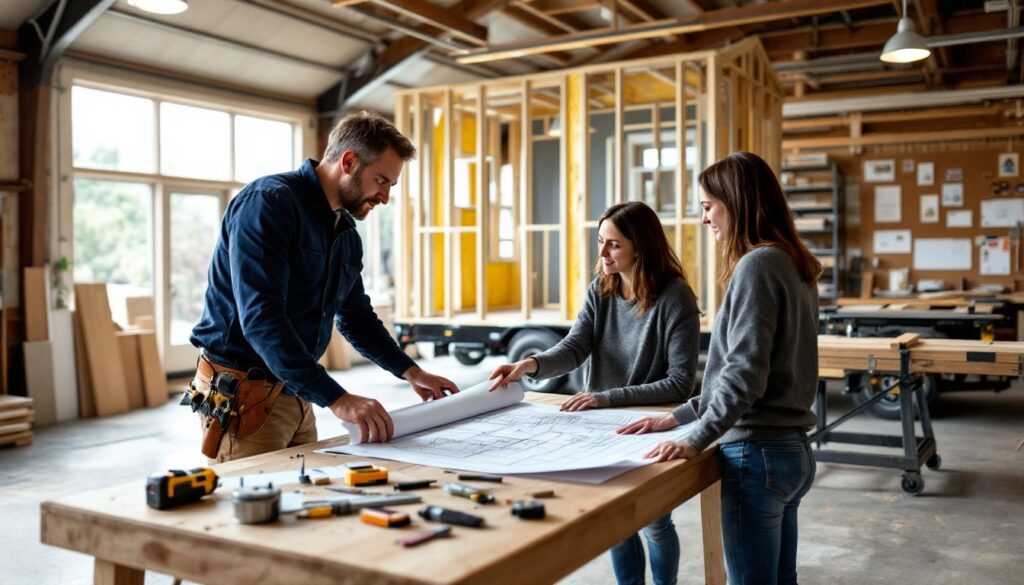
Second, site visits and consultations happen in person. You can walk through their shop, see joinery methods, check insulation techniques, and meet the crew who’ll build your home. That transparency is hard to replicate with a distant manufacturer. You’ll also get eyes-on quality control: visit mid-build to confirm electrical rough-in, plumbing runs, and framing details before walls close up.
Third, local builders often source materials regionally, which can trim costs and lead times. They’ll know which lumberyard stocks kiln-dried 2x4s (actual dimensions 1½” × 3½”) suitable for tiny home framing, and which suppliers carry lightweight LP SmartSide or metal roofing that won’t overload a trailer. Warranty service and callbacks are simpler too, no shipping a faulty window assembly across the country.
Finally, supporting a local shop keeps dollars in your community and builds long-term relationships. If you need modifications, repairs, or a second build down the line, you’ve got a proven partner a short drive away.
How to Find Reputable Tiny Home Builders in Your Area
Start with regional tiny home expos and home shows. These events let you tour models, compare finish quality, and speak directly with builders. Look for attention to detail: clean caulk lines, flush cabinet doors, solid door latches. These small touches reveal craftsmanship standards.
Check your state’s contractor licensing board. While not all states require a dedicated tiny home license, reputable builders hold general contractor or specialty licenses (carpentry, plumbing, electrical). Verify active status and check for complaints or disciplinary actions. If a builder holds an RV manufacturer license (for towable models), confirm it’s current.
Ask local building departments which builders they’ve worked with on tiny home permits. Code officials often remember contractors who submit thorough plans and pass inspections cleanly. Word-of-mouth from the permit desk carries weight.
Visit completed projects if possible. Some builders maintain a list of owners willing to show their homes. Walk through and ask owners about communication, timeline adherence, and post-delivery support. Pay attention to how the home has settled: are doors still square, windows sealed, floors level?
Social media and local tiny home groups on Facebook or Reddit can surface names, but vet any recommendation independently. Not every five-star review reflects actual building competence, some folks are just excited about their new space before the first winter or rainstorm tests the build quality.
Online Directories and Builder Networks
Several national directories list tiny home builders by state and region. The Tiny Home Industry Association (THIA) maintains a searchable member directory, though membership doesn’t guarantee quality, always do your own vetting. Websites like Angi aggregate contractor reviews and can connect you with builders in your area, though you’ll want to confirm they have specific tiny home experience. ImproveNet offers project cost guides and builder resources that help set realistic budget expectations.
Look for builders who showcase detailed project galleries: floor plans, material lists, weight breakdowns for towable models, and build timelines. Transparency in marketing often reflects transparency in business. If a builder’s site is vague or lacks finished projects, proceed with caution.
Cross-reference any directory listing with independent reviews on Google, Yelp, or the Better Business Bureau. A pattern of unresolved complaints, especially around deposits, missed deadlines, or incomplete punch lists, is a red flag.
Key Questions to Ask Before Hiring a Tiny Home Builder
Before signing a contract, ask these questions to gauge competence and compatibility:
• What certifications or licenses do you hold? Look for a general contractor license, RVIA certification for towable models, or NOAH certification for park model RVs. If the builder lacks these, ask why and what alternative credentials they offer.
• Can I see your insurance certificates? Request proof of general liability and workers’ compensation insurance. You don’t want to be liable if someone gets hurt on your property during the build.
• How do you handle permits and inspections? A reputable builder will either pull permits on your behalf or guide you through the process. If they discourage permits or suggest building “off the books,” walk away. Unpermitted builds can complicate financing, insurance, and resale.
• What’s included in your base price? Clarify whether appliances, fixtures, HVAC, solar panels, or hookups are included or add-ons. Some builders quote a shell price and tack on $15,000–$25,000 in “finishes.”
• What’s your typical timeline, and what could delay it? Honest builders will cite lead times for custom windows, weather delays, and permitting holdups. If they promise a finished home in six weeks with no caveats, be skeptical.
• Do you subcontract electrical and plumbing, or keep it in-house? Either approach works, but you should know who’s doing the work and whether they’re licensed. For towable models especially, 12V DC wiring and RV-style plumbing require specialized knowledge. If a builder relies heavily on subcontractors, ask about coordination and warranty responsibility.
• How do you handle change orders? Changes mid-build are common. A clear policy, preferably in writing, prevents disputes over added costs and delays.
• What warranty do you offer? A one-year workmanship warranty is standard. Some builders cover structural elements longer. Get it in writing and understand what’s excluded (e.g., owner-caused damage, normal wear).
Ask for at least three recent client references. Call them and ask specific questions: Did the builder stay on budget? How did they handle problems? Would you hire them again?
Comparing Costs: What to Expect from Local Builders
Tiny home costs vary widely based on size, finishes, and whether the unit is towable or on a foundation. According to cost data from HomeAdvisor, most builds fall between $30,000 and $60,000, though high-end custom homes can exceed $100,000. Regional labor rates, material availability, and local code requirements all influence final pricing.
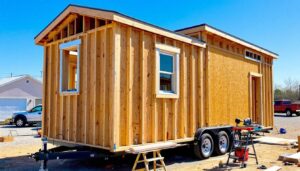
Shell-only builds (framing, sheathing, roofing, windows, and doors) typically run $15,000–$30,000 for a towable model on a trailer. You’ll finish the interior yourself or hire separate trades. This route works for DIYers comfortable with electrical, plumbing, and trim carpentry.
Turnkey builds include everything: HVAC (often a mini-split heat pump for efficiency), kitchen appliances, bathroom fixtures, flooring, cabinetry, and finish paint. Expect $50,000–$80,000 for a well-appointed 200–300 sq ft home. Luxury finishes, quartz countertops, hardwood floors, custom cabinetry, or off-grid solar packages, push costs higher.
Foundation vs. trailer also affects price. A tiny home on a permanent foundation may require a frost footing (depth varies by climate), utilities rough-in, and separate permitting, adding $5,000–$15,000 in site prep. Towable models need a certified trailer rated for the home’s weight (often 10,000–14,000 lbs GVWR), adding $4,000–$7,000 to the build cost.
Get itemized bids from at least three builders. Compare not just the bottom line but what’s included: insulation R-value, window specs (double-pane vs. Low-E), appliance brands, and finish materials. A low bid that skips underlayment, uses fiberglass batt insulation instead of closed-cell spray foam, or installs builder-grade fixtures will cost you in comfort and longevity.
Be wary of builders who demand large upfront deposits (more than 10–20% of the contract). Staged payments tied to milestones, trailer delivery, framing complete, rough-in inspections, final walkthrough, protect both parties.
Custom vs. Pre-Designed Tiny Homes: Which Should You Choose?
Pre-designed models are the builder’s proven floor plans. They’ve already solved layout challenges: where to tuck a washer/dryer combo, how to maximize under-stair storage, optimal placement for a composting toilet or RV-style cassette unit. Pre-designed homes typically cost 10–20% less than custom builds because the builder sources materials in bulk and streamlines construction. Lead times are shorter, often 8–12 weeks instead of 16–20.
Pre-designed plans suit buyers who find a layout that works and don’t need major changes. You can usually swap finishes (countertop material, flooring, paint colors) without affecting price much. If you see a model at a show or in a builder’s portfolio that checks your boxes, this route saves time and money.
Custom builds let you tailor every detail: ceiling height (critical if you’re tall or want a loft with sit-up space), window placement for specific views, specialized storage for hobbies or work equipment. Maybe you need a home office with dedicated electrical circuits for computers and monitors, or you’re designing for aging-in-place with a main-floor bedroom and zero-threshold shower. Custom work makes sense when standard plans don’t fit your needs.
Custom builds require more input from you: expect multiple design meetings, material selections, and revisions. Builders charge for design time, either as a flat fee ($1,500–$5,000) or rolled into the contract. Complex requests, like a tiny home shell that you’ll finish yourself, or integrating salvaged materials, add coordination and potential delays.
Some builders offer a hybrid: start with a base plan and modify it. You might extend the main floor by 2 feet, swap the kitchen layout, or add a bump-out for a reading nook. This approach balances cost control with personalization.
Regardless of path, review final plans carefully. Confirm that ceiling heights, door swings, and stair dimensions meet IRC minimums (if applicable) or your personal comfort standards. A 6’4″ headroom in a loft might be code-legal but miserable for a 6-footer.
Red Flags to Watch Out for When Vetting Builders
Certain warning signs should make you pause or walk away entirely. If a builder resists providing references, claims all past clients signed NDAs, or offers only testimonials on their own site, dig deeper. Legitimate builders are proud to connect prospects with happy customers.
Vague contracts are a major red flag. A solid contract specifies materials by brand and model (e.g., “Pella 250 Series double-hung windows” not “quality windows”), dimensions, finish schedules, payment milestones, and a realistic timeline with contingencies. If the contract is a one-page handshake agreement, you have no recourse if things go sideways.
Pressure tactics, “Sign today and save $5,000” or “We have a slot opening next week but it’ll fill fast”, are classic red flags. Reputable builders who do quality work stay busy: they don’t need to rush you.
Be cautious of builders who only accept cash or want payments wired to personal accounts. Use checks or credit cards tied to the business name for a paper trail. If a builder lacks a business bank account, that’s a sign of either inexperience or intent to avoid taxes and accountability.
Watch out for builders who dismiss inspections or suggest you skip them to “save time.” Inspections protect you. Whether it’s a third-party RVIA certification for a towable unit or a municipal building inspection for a foundation model, inspections verify code compliance and workmanship. Builders confident in their work welcome inspections.
If a builder has multiple unfinished projects visible in their shop with no clear timeline or client communication plan, they may be overextended. Ask directly how many builds they have in progress and how they manage workflow.
Finally, trust your gut. If communication is poor during the sales process, slow to return calls, vague answers, defensive when questioned, it won’t improve once you’ve signed. For inspiration on different builder styles and quality standards, explore examples like Amish-built tiny homes or regional builders offering eco-friendly designs. You might also check out what’s available in specific markets, such as tiny homes in Colorado or 2-bedroom models in California, to gauge regional builder quality and pricing.
Safety note: Always verify a builder’s insurance and licensing before making any deposit. If a project goes wrong, you want legal recourse and financial protection. Wear appropriate PPE (gloves, safety glasses, dust mask) if you visit an active job site, and never climb into an unfinished loft or onto a trailer without permission and a stable ladder.