Table of Contents
ToggleMyrtle Beach isn’t just a vacation destination anymore, it’s becoming a hotspot for tiny home buyers who want year-round coastal access without the mortgage weight of a traditional beach house. The combination of mild winters, beachside ambiance, and a growing acceptance of alternative housing makes this stretch of South Carolina coast increasingly attractive for downsizers, retirees, and remote workers seeking a simpler footprint. But buying a tiny home here isn’t as simple as touring a model and signing papers. Zoning restrictions, placement options, and the difference between mobile and foundation builds all play a role in whether your tiny dream fits the legal reality of Horry County.
Key Takeaways
- Tiny homes for sale Myrtle Beach attract downsizers and remote workers with mild winters, coastal amenities, and lower utility costs than traditional homes.
- Tiny houses on wheels are classified as RVs and difficult to finance conventionally, while foundation tiny homes can qualify for standard mortgages and appreciate like traditional properties.
- Horry County zoning restrictions, ADU allowances, and HOA covenants significantly impact where you can legally place a tiny home, making dedicated tiny home communities the safest option.
- Foundation tiny homes range from $70,000 to $150,000+ (excluding land), while turnkey wheeled units cost $50,000 to $90,000, plus $3,000 to $8,000 for site prep and utilities.
- Inspect thoroughly for structural integrity, understand financing limitations for RV-classified units, and test the layout in person before purchasing to ensure the lifestyle fits your needs.
- Hurricane-resistant features like metal roofing, tie-downs for wheeled units, and proper wind documentation are essential for coastal Myrtle Beach properties.
Why Myrtle Beach Is Perfect for Tiny Home Living
Myrtle Beach offers a climate that supports outdoor living nearly year-round. Average winter lows hover around 40°F, meaning less reliance on heavy insulation or high-BTU heating systems compared to northern markets. That translates to lower utility costs and simpler HVAC requirements, critical when you’re working with 100 to 400 square feet of conditioned space.
The area also has a well-established tourism and seasonal rental market. Many tiny home buyers purchase with the intent to use their unit part-time and rent it out during peak summer months. Short-term rental demand is strong, though rules vary by municipality and whether you’re inside city limits or in unincorporated county land.
Access to beaches, golf courses, and the Intracoastal Waterway adds lifestyle appeal without requiring a sprawling property. Tiny home living here isn’t about isolation, it’s about proximity to amenities with a smaller physical and financial footprint. According to Curbed, coastal markets are seeing increased interest in compact, flexible housing as buyers prioritize experience over square footage.
Types of Tiny Homes Available in Myrtle Beach
Not all tiny homes are created equal, and understanding the distinctions matters when it comes to financing, placement, and resale value.
Tiny Houses on Wheels vs. Foundation Models
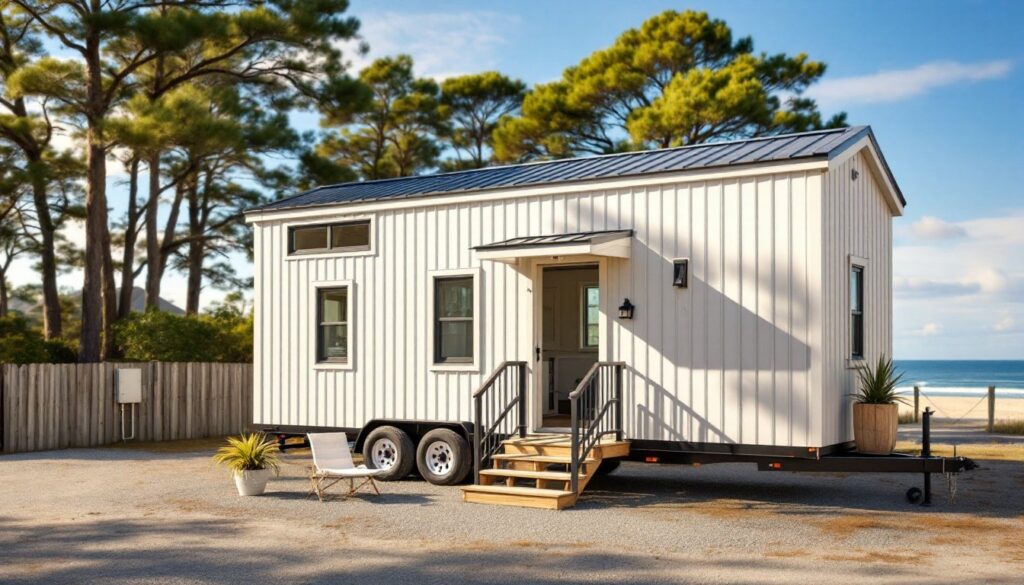
Tiny houses on wheels (THOWs) are built on trailers and classified as recreational vehicles (RVs) in most jurisdictions. They typically range from 8 to 8.5 feet wide (road-legal without permits) and 20 to 40 feet long. These units fall under RVIA or NOAH certification standards, not the International Residential Code (IRC). That means they’re easier to move but harder to finance through traditional mortgages. Most buyers pay cash or use RV loans with higher interest rates and shorter terms.
Foundation tiny homes are permanently affixed to a concrete slab, pier-and-beam, or crawlspace foundation. They must meet IRC Appendix Q standards for tiny houses (if applicable in your jurisdiction) or full residential code if over 400 square feet. These homes are easier to insure and finance, and they’re treated as real property, not personal property. They also appreciate like traditional homes, assuming the land is owned, not leased.
Foundation models are more common in planned tiny home communities or on private lots where the buyer owns the land. Wheels-based models dominate the RV park and short-term rental market. Buyers interested in exploring the financial side can review a detailed Tiny Home Cost Breakdown to understand upfront and ongoing expenses.
Where to Find Tiny Homes for Sale in Myrtle Beach
Tiny homes in the Myrtle Beach area come from a mix of local builders, national manufacturers, and private sellers. Here’s where to start your search:
- Local builders and custom shops: Several small-scale builders operate within an hour of Myrtle Beach, offering custom builds on wheels or slabs. Expect lead times of 3 to 6 months and deposits of 20% to 30%.
- Tiny home communities: A handful of dedicated tiny home parks and communities have opened in the greater Myrtle Beach area, offering lots for sale or lease with existing or custom-built units. These often include shared amenities like pools, dog parks, and event spaces.
- Private sellers and resale market: Platforms like Facebook Marketplace, Tiny House Listings, and Craigslist feature pre-owned units. Inspection is critical, look for water damage, roof integrity, and whether appliances are included.
- National manufacturers: Companies like Tumbleweed, Tiny Heirloom, and others ship to South Carolina. Factor in $5 to $10 per mile for transport and setup costs.
If you’re considering a move from another region, it’s worth comparing how tiny homes perform in different climates, as coastal humidity and hurricane exposure require different material choices than desert or mountain builds.
For those seeking contractor assistance or cost estimates, resources like HomeAdvisor can help match you with local professionals experienced in tiny home placement and site prep.
What to Expect: Pricing and Features
Pricing for tiny homes in Myrtle Beach varies widely based on size, finish level, and whether the unit is move-in ready or a shell.
Price ranges (as of 2026):
- DIY shells: $10,000 to $25,000 for a framed structure on a trailer with roof, walls, and basic windows. Buyer finishes interior, plumbing, and electrical. More on this approach at Tiny Home Shells.
- Turnkey models (wheels): $50,000 to $90,000 for a finished THOW with appliances, furniture, and hookups.
- Foundation tiny homes: $70,000 to $150,000+ depending on square footage, materials, and site work. Does not include land.
Typical features:
- Kitchenettes with apartment-size appliances: 2-burner cooktop, mini-fridge, combination microwave-convection oven.
- Lofted sleeping areas accessed by ladder or alternating-tread stairs (which eat up more floor space but meet code in some cases).
- Composting or marine-style toilets in off-grid builds: standard flush toilets in foundation models with sewer or septic.
- Split mini-ductless heat pumps rated for coastal humidity. Avoid window units, they’re inefficient and code-restricted in some communities.
- Metal roofing (standing seam or corrugated) for hurricane resistance and longevity. Shingles are cheaper but less durable in high-wind zones.
Custom builder options can include solar arrays, rainwater catchment, and spray-foam insulation upgrades. Each adds cost but improves off-grid capability and energy efficiency.
Zoning Laws and Placement Options in Myrtle Beach
This is where many buyers hit a wall. Horry County and the City of Myrtle Beach have different rules, and what’s allowed in one jurisdiction may be prohibited in the next.
Key zoning considerations:
- Minimum square footage: Some residential zones require homes to be at least 600 to 800 square feet, which disqualifies most tiny homes unless they’re classified as accessory dwelling units (ADUs).
- ADU allowances: Horry County permits ADUs on single-family lots in certain zones, but they must meet setback, utility, and design standards. Not all neighborhoods allow them due to HOA covenants.
- RV and THOW placement: Tiny homes on wheels are often treated as RVs. They’re allowed in RV parks but typically not on residential lots for more than 30 to 90 days without a variance.
- Tiny home communities: These are your best bet for legal, hassle-free placement. They’re zoned specifically for small dwellings and often include covenants that streamline permitting.
Always contact the Horry County Planning and Zoning Department before purchasing. Rules change, and what worked two years ago may not apply today. If you’re considering other markets, comparing regulations, like those for tiny homes in Utah, can provide context on how progressive or restrictive South Carolina’s policies are.
For cost planning related to site prep, utilities, and permitting, ImproveNet offers region-specific guides that can help estimate expenses.
Tips for Buying Your Myrtle Beach Tiny Home
Buying a tiny home isn’t the same as buying a condo or a traditional house. Here’s what to prioritize:
1. Inspect before you buy. Hire a certified home inspector familiar with tiny homes or RVs. Check for roof leaks, trailer frame rust, and whether plumbing and electrical meet code. If it’s a THOW, verify the trailer’s GVWR (gross vehicle weight rating) is adequate for the structure.
2. Understand your financing options. Traditional mortgages rarely apply to THOWs. You’ll need an RV loan, personal loan, or cash. Foundation tiny homes on owned land can qualify for conventional or construction loans if they meet IRC standards.
3. Factor in site prep costs. Even if the home is turnkey, you’ll need utility hookups. Expect $3,000 to $8,000 for electric, water, and sewer connections on a developed lot. Off-grid setups (solar, septic, well) can run $15,000 to $40,000 depending on soil conditions and local requirements.
4. Get insurance quotes early. Not all carriers insure tiny homes. THOW owners often use RV insurance: foundation models may qualify for homeowners coverage. Coastal flood insurance is a separate policy and can add $500 to $2,000 annually depending on FEMA flood zone.
5. Visit comparable markets for perspective. If Myrtle Beach pricing or zoning feels restrictive, exploring options in nearby regions or even other states, like tiny homes in St. Louis, can provide useful comparisons.
6. Plan for hurricane prep. Tie-downs are essential for THOWs. Foundation models should have hurricane straps, impact-resistant windows, and metal roofing. Coastal building codes are stricter for wind load, ensure your builder or seller provides documentation of compliance.
7. Test the layout before committing. Rent a tiny home for a weekend. Live in it. Cook, sleep, and move around. You’ll quickly learn whether a loft bed or composting toilet works for your lifestyle.