Table of Contents
ToggleTiny houses aren’t just a trendy lifestyle pivot, they’re a legitimate housing option with real upfront costs, ongoing expenses, and plenty of variables that swing the final price tag. Whether you’re considering a DIY trailer build, a turnkey prefab, or a custom design, understanding the full financial picture matters before you commit. The cost of a tiny house can range anywhere from $10,000 for a bare-bones DIY project to well over $150,000 for a high-end custom build. This guide breaks down what drives those costs, what you can expect to pay by build type, and the hidden expenses that catch first-time builders off guard.
Key Takeaways
- The cost of a tiny house ranges from $10,000 for DIY builds to over $150,000 for custom designs, with foundation type, square footage, material quality, and utilities being the primary cost drivers.
- DIY tiny house projects cost $10,000–$40,000 but require 500–1,200 hours of labor spread across 6–18 months, making them ideal for hands-on builders with moderate carpentry skills.
- Prefab tiny homes offer a middle ground at $30,000–$80,000, while custom-built options cost $60,000–$150,000+ and handle permits and code compliance for buyers unfamiliar with local zoning.
- Hidden expenses like land ($5,000–$50,000+), utility hookups ($5,000–$15,000), insurance ($600–$2,000 annually), and maintenance ($500–$1,500 yearly) can significantly exceed the initial purchase price.
- Trailer-based tiny houses depreciate 10–20% in the first few years like RVs, while foundation-based homes on owned land tend to hold value better and may qualify for traditional homeowners insurance.
- Before committing to a tiny house, verify local zoning regulations, assess your skills and timeline honestly, and budget for ongoing costs including land parking fees ($200–$800 monthly), propane refills, and potential towing expenses.
What Determines the Cost of a Tiny House?
The price of a tiny house depends on several core factors, and each one shifts the budget in a different direction. Understanding these variables helps you set realistic expectations and make smarter decisions during planning.
Foundation type is the first big decision. Tiny houses on wheels (THOWs) sit on trailers, which cost between $3,000 and $7,000 depending on size and axle capacity. Foundation-based tiny homes require either a concrete slab, pier-and-beam, or crawl space, which can range from $2,000 to $10,000 depending on site conditions and local frost lines. Trailer-based homes avoid some permitting headaches but come with weight restrictions and towing considerations.
Square footage drives material and labor costs. Most tiny houses fall between 100 and 400 square feet. Smaller builds under 200 square feet can save significantly on framing lumber, sheathing, and roofing materials. Every additional 50 square feet adds roughly $5,000 to $10,000 in materials and labor, depending on finishes.
Material quality and finishes separate budget builds from luxury models. Using reclaimed wood, basic vinyl flooring, and stock cabinets keeps costs low. Upgrading to hardwood floors, custom cabinetry, granite countertops, or high-efficiency windows can double material costs. For example, a standard fiberglass tub-shower combo runs $300 to $600, while a tiled walk-in shower with a frameless glass door starts around $2,500.
Utilities and systems add another layer. Off-grid setups with solar panels, composting toilets, and rainwater catchment systems cost $8,000 to $20,000 upfront but reduce ongoing utility bills. Grid-tied homes need standard electrical panels, plumbing hookups, and HVAC systems, budget $6,000 to $12,000 for these installations. All electrical work must meet National Electrical Code (NEC) standards, and many jurisdictions require licensed electricians for final connections.
Location and permits can’t be ignored. Some areas classify tiny houses as RVs, others as accessory dwelling units (ADUs), and some don’t allow them at all. Zoning regulations vary widely, and permit fees range from $500 to $5,000 depending on jurisdiction. Foundation-based builds typically require more extensive permitting than trailer-mounted homes.
Labor costs vary by region and skill level. Hiring a general contractor for a custom build typically adds 15% to 25% of total project cost. In high-cost areas like the Pacific Northwest or Northeast, expect labor rates of $50 to $100 per hour. Rural areas with lower costs of living may see rates closer to $30 to $50 per hour.
Average Tiny House Costs by Build Type
The build approach you choose has the biggest impact on your final budget. Each method comes with distinct cost ranges, timelines, and trade-offs between sweat equity and convenience.
DIY Tiny House Builds
Building your own tiny house from scratch offers the lowest cost but demands time, skill, and patience. Most DIY builders spend between $10,000 and $40,000 depending on size, materials, and how much they can salvage or score secondhand.
Materials make up the bulk of the budget. Expect to spend:
- Trailer: $3,000–$7,000 for a dual-axle trailer rated for 10,000+ lbs
- Framing lumber: $2,000–$4,000 (using 2×4 studs on 16″ centers, 2×6 for floor joists)
- Sheathing and insulation: $1,500–$3,000 (OSB or plywood sheathing, spray foam or mineral wool insulation)
- Roofing: $800–$2,000 (metal roofing is common for weight and durability)
- Windows and doors: $1,000–$3,000 (energy-efficient windows add cost but pay off in comfort)
- Electrical and plumbing rough-in: $1,500–$3,000 (wire, breaker panels, PEX tubing, fixtures)
- Interior finishes: $2,000–$8,000 (flooring, cabinets, countertops, paint, trim)
- Appliances: $1,500–$4,000 (mini-fridge, two-burner cooktop, on-demand water heater, composting or RV toilet)
Tool rental or purchase adds another $500 to $2,000 if you don’t already own a circular saw, drill, level, and basic carpentry tools. A miter saw makes trim work much cleaner, and a pneumatic framing nailer speeds up wall assembly.
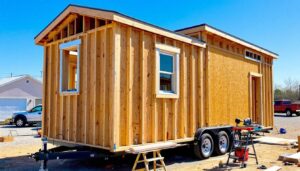
DIY builds take 500 to 1,200 hours of labor depending on experience and complexity. Most first-timers spread this over 6 to 18 months. You’ll need help for framing and raising walls, tiny house framing is still too awkward and heavy for solo work.
Safety gear is non-negotiable: safety glasses, work gloves, dust masks (N95 or better when cutting treated lumber or insulation), and ear protection when running power tools. If you’re working with spray foam insulation, a respirator with organic vapor cartridges is required.
DIY projects don’t always avoid permits. If your tiny house sits on a permanent foundation, most jurisdictions require building permits and inspections. Trailer-based builds may fall into a gray area, legal considerations depend heavily on how and where you intend to park it.
Prefab and Manufactured Tiny Homes
Prefab tiny homes arrive partially or fully assembled from a factory. These range from basic shells to turnkey models with appliances and finishes included. Pricing typically falls between $30,000 and $80,000 depending on size and options.
Shell kits, framed walls, roof trusses, windows, and doors without interior finishes, start around $20,000 to $40,000 for a 200-square-foot unit. Buyers finish electrical, plumbing, insulation, and interiors themselves, cutting labor costs but still requiring moderate DIY skills. Tiny home shells offer a middle path between full DIY and turnkey options.
Turnkey prefab models include finished interiors, appliances, and systems. These run $50,000 to $80,000 for standard models and climb past $100,000 for larger or upgraded units. Delivery fees add $2,000 to $10,000 depending on distance and access. Crane or forklift rental may be required if the site isn’t accessible to a flatbed trailer.
Manufactured tiny homes built to HUD code (like park model RVs) offer financing options that traditional tiny houses don’t. Lenders treat these as recreational vehicles, which opens up RV loans with terms of 10 to 15 years. Interest rates typically run 5% to 8%, higher than conventional mortgages but lower than personal loans.
Prefab buyers skip much of the construction headache but sacrifice customization. Floor plans are fixed, and upgrades (like swapping laminate counters for quartz) cost more than if you sourced materials yourself. Delivery timelines range from 8 to 20 weeks after order, depending on the manufacturer’s backlog. Projects that emphasize sustainability, such as eco-friendly tiny homes, often feature upgraded insulation and energy systems that add to the base price.
Custom-Built Tiny Houses
Hiring a professional builder or tiny house company to design and construct a custom home delivers the highest quality and least personal labor, at the highest cost. Custom builds range from $60,000 to $150,000+, with luxury models pushing past $200,000.
Custom builders charge either a fixed contract price or cost-plus (materials plus 15% to 25% markup). Fixed-price contracts offer budget certainty but limit mid-project changes. Cost-plus arrangements allow flexibility but require close oversight to avoid cost creep.
Design fees add $2,000 to $8,000 if you hire an architect or designer for custom plans. Many tiny house builders include basic design services, but significant customization (like a second loft, custom staircase, or complex roofline) costs extra.
Custom builds take 3 to 6 months from contract signing to delivery. Builders handle permits, inspections, and code compliance, which removes a major stress point for buyers unfamiliar with local zoning laws. But, buyers must verify the builder’s reputation, licensing, and insurance. Tiny house construction doesn’t require a general contractor’s license in all states, so quality varies widely.
Financing custom tiny houses is tricky. Most won’t qualify for traditional mortgages because they’re either on trailers or don’t meet minimum square footage requirements for residential loans. Options include personal loans (8% to 15% interest), builder financing (if offered), or cash. Some buyers use home equity lines of credit (HELOCs) if they own other property. Cost breakdowns vary widely based on finishes and systems.
A custom build delivers exactly what you want, but it’s the most expensive path per square foot. If budget is tight, a prefab shell or mid-range DIY build offers better value.
Hidden Costs and Ongoing Expenses to Consider
The purchase or build price is only part of the total cost of ownership. Several ongoing and unexpected expenses catch first-time tiny house owners off guard.
Land or parking fees are often underestimated. Buying land outright costs $5,000 to $50,000+ depending on location, acreage, and utilities. Rural land is cheaper but may lack water, sewer, and electric hookups, which cost $10,000 to $30,000 to bring in. Parking a tiny house on someone else’s property typically runs $200 to $800 per month depending on amenities and proximity to urban areas. RV parks and tiny house communities charge similar rates. According to home improvement planning resources like HomeAdvisor, site preparation and utility installation often exceed initial estimates.
Utility hookups and off-grid systems add upfront and maintenance costs. Grid-tied electric, water, and sewer connections cost $5,000 to $15,000 total if infrastructure exists nearby. Off-grid solar systems with battery storage run $8,000 to $20,000 depending on power needs. Composting toilets require periodic maintenance and compost management. Propane tanks (common for cooking and heating) need refills every few months at $50 to $150 per fill.
Insurance for tiny houses is complicated. If your home is on a trailer, RV insurance may cover it at $600 to $1,200 per year. Foundation-based tiny homes may qualify for standard homeowners insurance, but many insurers balk at non-traditional construction. Some tiny house owners use personal property or specialty tiny house insurance, which costs $800 to $2,000 annually. Always confirm coverage before assuming your home is protected.
Transportation and storage matter for trailer-based builds. Towing a tiny house requires a heavy-duty truck (3/4-ton or larger) rated to pull 10,000+ lbs. If you don’t own one, budget $40,000 to $70,000 for a used truck. Professional towing services charge $2 to $5 per mile. If you need temporary storage between build and occupancy, expect $100 to $400 per month for secure outdoor storage.
Maintenance and repairs are ongoing. Tiny houses on trailers experience more wear and tear from road vibration and settling. Roof seals, window caulking, and trailer bearings need regular inspection. Budget $500 to $1,500 per year for routine upkeep. Foundation-based tiny homes have similar maintenance needs to conventional houses, HVAC servicing, gutter cleaning, exterior paint touch-ups, but on a smaller scale.
Taxes and fees vary by classification. If your tiny house is considered an RV, you may pay annual registration fees ($100 to $500). If it’s classified as real property, expect property taxes based on assessed value, though these are typically low due to small size. Some municipalities charge ADU fees or impact fees if your tiny house connects to municipal utilities. Small space living resources like Apartment Therapy often feature stories about the practical realities of downsizing and associated costs.
Heating and cooling costs depend on climate and insulation quality. Well-insulated tiny houses with mini-split heat pumps cost $30 to $80 per month to heat and cool in moderate climates. Poorly insulated builds or those relying on electric resistance heaters can see bills of $100 to $200 monthly in extreme weather. Propane heaters are efficient but require tank refills. Features popular in current tiny home trends like oversized windows increase natural light but can drive up heating and cooling costs if not properly specified.
Finally, depreciation affects resale value. Tiny houses on trailers depreciate like RVs, expect to lose 10% to 20% in the first few years. Foundation-based tiny homes on owned land tend to hold value better, especially if permitted and built to code.
Conclusion
The true cost of a tiny house extends far beyond the initial build or purchase price. DIY builds offer the lowest upfront cost but demand significant time and skill. Prefab models balance cost and convenience, while custom builds deliver exactly what you want at a premium. Hidden expenses, land, utilities, insurance, and maintenance, add thousands more over time. Before committing, run the full budget including these ongoing costs, verify local zoning and permitting requirements, and honestly assess your skills and timeline. A well-planned tiny house can deliver financial freedom and simplified living, but only if you enter the process with eyes wide open and a realistic budget in hand.